Tag: memoir

  • Seeing Dead People: where one’s past bleeds into the present

    Seeing Dead People: where one’s past bleeds into the present

    As I was about to give birth to my firstborn child, I began to see dead people in the faces of the people around me.

    It started during the second night of attempted labor induction. My husband was sleeping in the couch next to my bed. I lay in my bed, fading in and out of sleep, partially dilated and waiting for my baby to come.

    The door opened. One of the assistant night nurses walked into my room to take my blood pressure. I looked at her, saw my late friend Megan’s face, and did a double-take to check my reality. From her fine-textured blond hair to her blue eyes and the freckles on her face, and even her calm, rational demeanor, this nurse was my late friend Megan’s doppelganger. Megan had passed away suddenly in 2019 from a heart attack. I had seen her a few days before she died, and she had mentioned having angina and had an appointment with her cardiologist scheduled for the following week. But then her brother reached out to me when I was at work a few days later and told me that Megan had passed away in her condo.

    Although I knew this was not Megan, seeing someone with Megan’s face, hair, and body being alive and well in the world filled me with a sense of peace. It was like peering into a parallel universe in which a version of her was alive.

    I tried not to stare too hard.

    Was I going insane, trying to find the familiar in the unfamiliar?

    Or was my transition into motherhood bringing up feelings of loneliness and memories of old faces? I would have loved for Megan and my sister to meet Baby Daniel. And although I am willfully estranged from my parents, I grieve the relationship I wish I had with them…an emotionally safe one that does not exist.

    Or was I dying? Isn’t it a thing that people see their departed loved ones right before they die?

    Ultimately, the induction failed. After reaching 7 centimeters of dilation, I burned with fever from amniocentesis and Baby Daniel’s heart rate began dipping with each contraction. The nurse and doctor spoke to me and a few minutes later, I was rolled into the operating room for a c-section. Compared to the two nights of attempted labor induction, the c-section was quick and completed after 40 or so minutes.

    After the c-section, Baby Daniel was placed in a clear plastic bassinet in our postpartum room, next to my hospital bed. I reached over the edge of the bassinet to hold his tiny, soft hands—and before my eyes flashed the memory of my mother holding my sister’s stiff, gray hands in the casket.

    I gazed at Baby Daniel and saw the baby eyes of my sister staring back at me. But perhaps all newborns look the same: freshly decompressed from being squished inside a uterus for the past several months.

    Daniel was conceived not long before or after my sister’s death. Because of the close timing of the two events, I could not think of one without remembering the other.

    I have found it is more socially acceptable to celebrate than it is to grieve. Celebrations are social, but grief is personal. One’s celebration makes others feel good. One’s loss makes others feel uncomfortable—partly because different people grieve differently and we don’t know how to comfort everyone (some want to be left alone, others don’t want to be alone). Grief has a shelf life, a socially accepted window of time in which it is okay, or even expected, to express grief, and after that window closed, I felt I was supposed to shift, at least publicly, to being excited about my pregnancy. It was easier for others to celebrate with me about the pregnancy than to grieve with me about my sister. It felt like I was supposed to be excited now since I was pregnant, even though my sister’s death was nearly as fresh as my pregnancy.

    But the thing was, although I was happy about the pregnancy, I was still dealing with the emotional fallout of my sister’s suicide, my estrangement from my parents, and the childhood trauma I had spent most of my adulthood avoiding.

    Needing the space and time to grieve, I withdrew into myself.

    And now, as I navigate new parenthood and Baby Daniel’s first days in this world, my mind straddles the past and present, grasping for connections, no matter how tenuous.

    My Mother’s Motherhood

     As a new parent, I have finally reached the same life stage I’ve only ever known my parents to be in. My mom had me when she was 20. My dad was 27. During the dark hours of the morning I wonder what it might have been for my mom, who had met my dad through a matchmaker in her village and then moved across an ocean to marry him and have a baby without any family or extended relatives in America.

    Baby knowledge was harder to come by in 1990, when I was born. Nowadays I can enter a search or question in Google or parenting forums for informal advice and parenting perspectives and anecdotes, but back then, my mom would have relied on whatever she learned while growing up or asking people, or maybe a book. Without her “village,” my mom was left to handle a newborn baby equipped with only her own knowledge and instincts. I don’t know how she treated me as a baby.

    When I was six, my brother was born, at 8.5 pounds. I pretended to sleep while my mom held and screamed at my baby brother to sleep. Her thunderous voice and the rage behind it scared me. Silently, beneath the covers of my bed, I begged to God to make my brother stop crying. But he would keep crying all night long.

    My sister was born seven years after my brother, at 10.5 pounds. She would also cry a lot at night. While trying to rock my crying sister to sleep, my mom would get frustrated and say things like “hope your whole family dies” (sounds more succinct in Chinese) and “I wish I had aborted you,” which makes me suspect my sister was a surprise baby.

    Nowadays, a web search reveals tips and advice for dealing with a fussy baby. And a foray into parenting forums would find other parents with whom one could commiserate about baby sleep issues. My mom had none of these resources in the ‘90s. On top of that, my mom had left behind her family and friends when she moved to the United States to marry my dad.

    On one hand, my mom was making the most of what she had. But then I remember the physical, emotional, and sexual abuse she inflicted on me and the rest of the family—deep harm that her lack of knowledge or trauma cannot justify, harm that eroded the confidence of her children, and harm that comes from denying the harm that she and my dad inflicted. After remembering these things, I remind myself that having a hard life does not excuse her decision to abuse us. Then I feel angry. And the cycle of thought repeats until I get tired of it and start scrolling through Amazon for a quick distraction.

    I’m filled with gratitude for the resources I do have today. My husband shares household tasks and nighttime shifts with me. I go to therapy. I have access to internet resources and forums that offer tips and anecdotes that help me feel less alone. I’m no longer in touch with my toxic parents so they cannot add to my level of stress.

    Regression & Upheaval

    Becoming a new mom has sifted old memories from the bottom of my pond into the surface. How was my mom when I was a child? How will I be as a mother to my own child? I catch myself sliding back into memories, hangups, and issues I thought I had already processed. Childhood abuse. Sexual abuse. Why are we going through this again?

    In a recent therapy session I expressed grief about the relationship I wished I’d had with my parents. But this was something I’d worked through several months ago. My therapist asked if I was reconsidering my estrangement (a hard no) or if I just wanted to express my feelings of grief (yes), and suggested that instead of using the word “regress,” I can use the word “upheaval” to reframe this resurgence of old memories amid my transition into motherhood.

    I have also been thinking about my sister’s suicide. My mind has preoccupied itself with futile exercises such as wondering how things were like for her during her last days and moments, imagining the pain she must have felt for a long time, and what abuse she suffered alone from our parents. And feeling shame by how I had let myself assume my mother had somehow softened and changed with two subsequent children, even though the likelier truth was that she had learned to hide her worst impulses from me after I moved out. I also think about how I failed my sister by playing along with our parents’ “happy family” façade.

    On the outside, I looked like I was functioning well. My sister wouldn’t have seen the anger that simmered just beneath the surface, or how growing up with my mother’s temper and my dad’s enabling had molded me into an anxious, self-hating, fearful people-pleaser. My sister must have felt so alone in her own experience. She was in so much pain but could not see it reflected in anyone but herself, because I was hiding it deep inside me all along.

    During late night feedings at 2 AM, I look at Baby Daniel and see my sister’s eyes staring back into my soul. It is too late for me to save my sister but I can still protect my baby.

    The “Shit Pie” Metaphor

    Recently I came across the “shit pie” metaphor for situations in which abuse has occurred, where things are great when they’re good, and terrible when they’re bad: If you are eating a pie, and it’s an amazing, delicious pie with fresh, luxurious ingredients, but then you find out there is also shit in that pie, do you keep eating that pie? When I feel conflicted about my decision to cut off contact with my parents, I think of the pie and how sad it is to throw away a whole delicious pie because of a piece of shit in it. It doesn’t matter how good the rest of the pie is; the shit has contaminated it and made the entire pie unsafe to eat.

  • When We Weren’t Afraid

    When We Weren’t Afraid

    As kids, my little brother and I would ride our bikes along the bike path, and along the way we would encounter this young homeless guy and say hi. He was usually doing his own thing, but I forget what now. Probably just hanging around. At some point we stopped to offer him some money, about a dollar or two.

    “No thanks,” he said, squinting up at us with a face that resembled a rugged Jason Mraz—brown hair, blue eyes, the beginnings of crow’s feet. “I don’t take money from kids.”

    We offered him a snack-sized bag of Cheetos from our biking snacks stash, which he accepted.

    Most of our conversations were about snacks that my brother and I wanted to give him. He didn’t talk much about his life or how he had ended up homeless and we didn’t ask.

    Eventually we stopped seeing him on the trail.

    A few years later, my brother and I went to a nearby store and saw a brown-haired homeless guy resembling Jason Mraz laughing to himself while smashing some apples with his feet in the parking lot. If he recognized me and my brother, he didn’t show it at all.

    But at the time my brother and I drew the same connection in our heads: our guy had gone crazy.

    We never saw him again.  

    I look back at those times and think about how we didn’t think much of approaching a homeless guy at the time. Nowadays I’m a lot more wary of strangers. Maybe it’s from all those crime documentaries, or maybe I’m just more aware of the ugly parts of human nature now.

  • We Were Bold, We Were Six

    We Were Bold, We Were Six

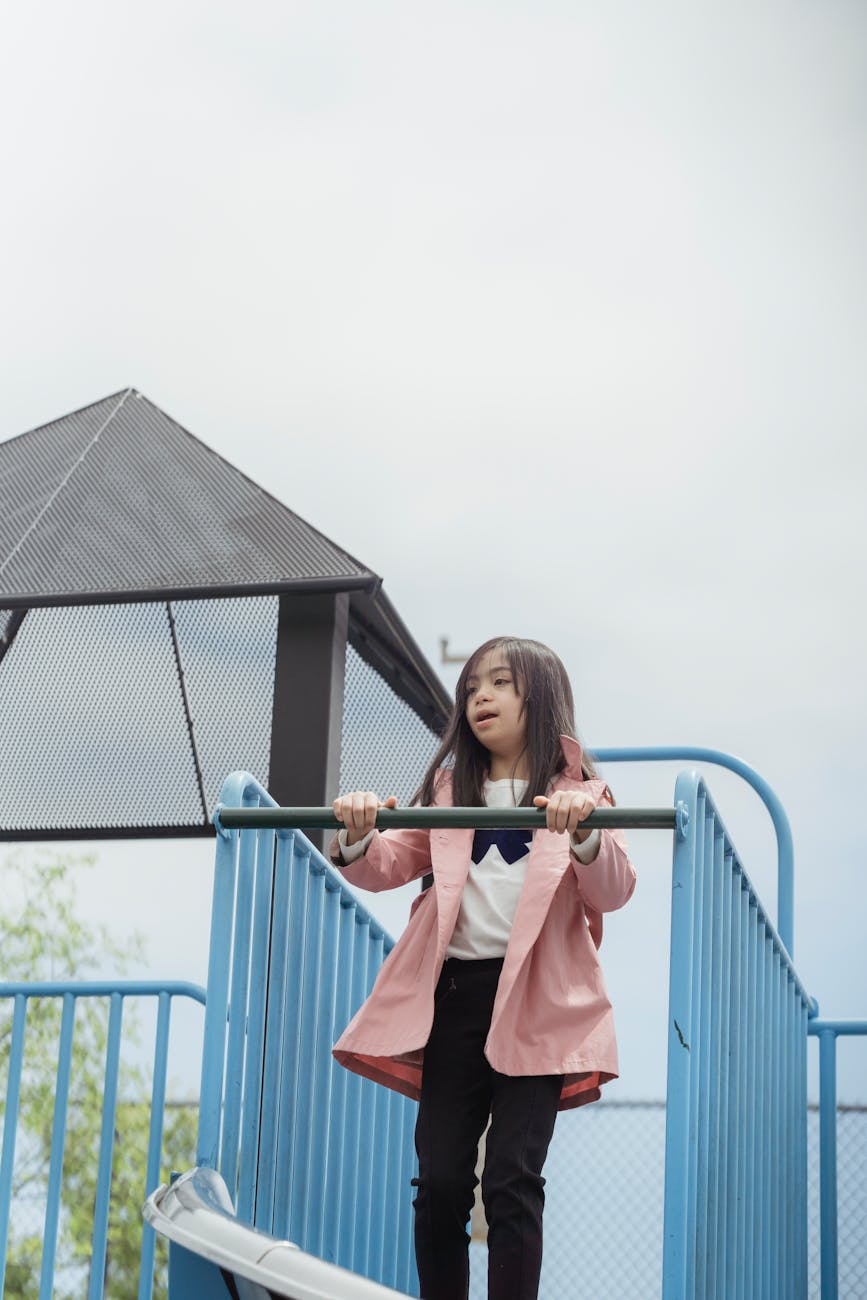
    The apex of the tall metal slide towered over our heads as it breached the clouds. It took forever to climb the stairs to get to the top, and by the time I made it, I looked down at the ground, now comprised of a smattering of colors and moving shapes. I trembled. If I fall…

    I spent the first six years of my life in inland Northern California. During the winter it would rain and then the puddles in the soccer fields would freeze over, creating a smooth, matte surface. My first-grade classmates and I would take turns jumping on the ice until the top layer cracked like a the surface of a creme brulee, soaking our shoes and socks with icy, brown water.

    School rules forbade us from going to the end of the field, where the fence overlooked a large swimming pool with multiple lanes. Whenever the teachers on duty caught us venturing towards the fence, they would grab a megaphone to call us back with threats of yellow cards or (gasp!) red cards.

    On some mornings a thick coat of fog would wrap itself across the field and we kids would mistakenly think it would disguise our presence as we hurried toward the fence, only to hear a teacher’s voice sputter angrily from the megaphone.

    At six years of age, I had already experienced moments of terror and tension at home–getting beaten by my mother, and watching her beat and scream at my dad and grandma. My father groped me but at the time it seemed like a normal thing within the family, under the banner of playful affection from a Chinese father. The weight of this experience wouldn’t catch up to me until later, as I underwent puberty.

    At school, away from hitting hands and groping hands, I was able to enjoy the moment with my friends, exploring the forbidden edges of the world, and pressing our feet on ice to see how much it could hold before cracking. We were bold, we were six.

  • Cool Asian Americans: on double eyelids, belonging, and learning not to measure worth by beauty

    Cool Asian Americans: on double eyelids, belonging, and learning not to measure worth by beauty

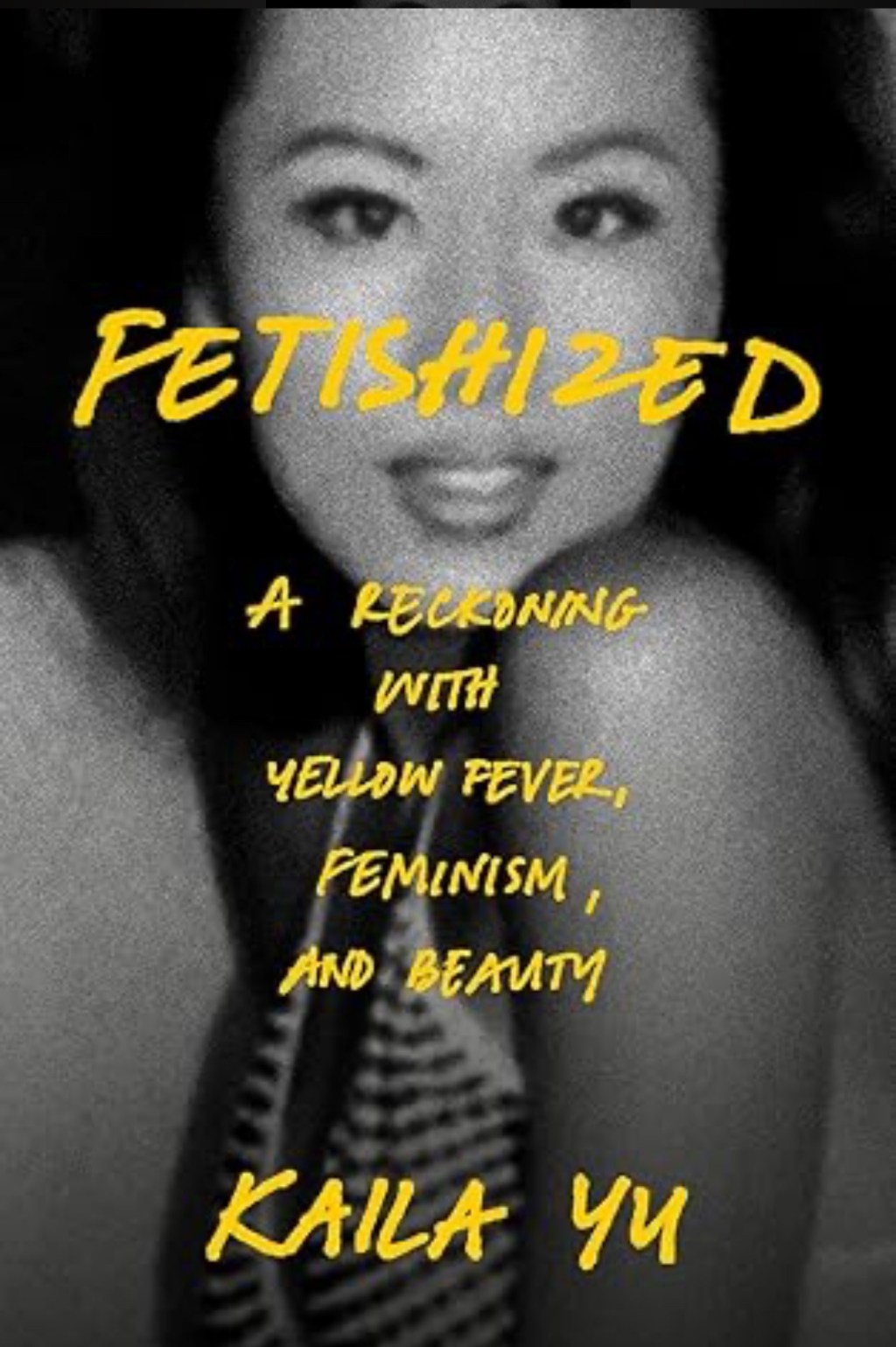
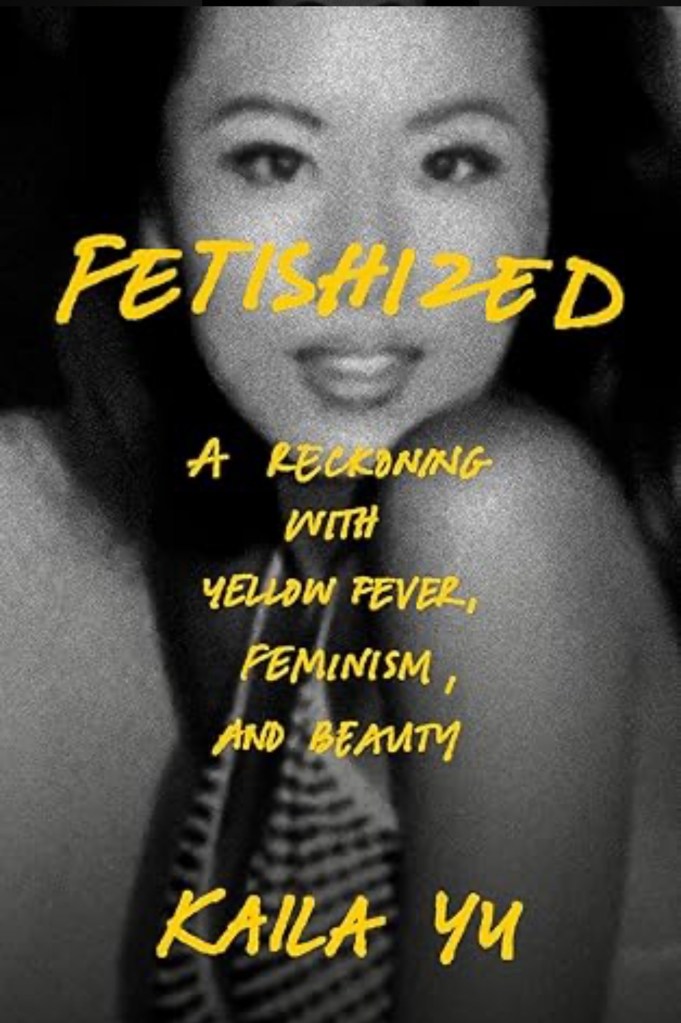
    While my body fights off this uncomfortable cold, I will share a little something with you that I scribbled down recently after reviewing Kaila Yu’s memoir, Fetishized. This is a vulnerable reflection about my own personal relationship with feeling beautiful as an Asian American.

    ***

    Cool Asian Americans. Import cars, pinup models, house parties, clubbing, and raves…This was a scene I never belonged to as a young Chinese American, partly because my family lived far from other Asians.

    I grew up near the border. The only times I saw other Chinese Americans was during the weekends, when my parents would make the long drive to the Chinese-Vietnamese supermarket in City Heights, and drop me and my brother off at Chinese school held on the second floor of a Buddhist temple.

    The other reason was because I was fat, ugly, and socially awkward. Of course, it didn’t help that my home environment was stifling and oppressive.

    Kaila Yu’s memoir stirred up old pain and feelings of envy in me, and I am ashamed to admit this. I found myself envying her freedom to sneak out at night and party with friends (clearly her parents weren’t as scary as mine), her beauty, and especially her outgoingness and success with making friends with the cool Asian crowd–the very types of people that excluded and made fun of me in Chinese school.

    But despite these differences between us, I found her inner experience very relatable because of how she used beauty as a tool or standard by which she could obtain that external validation she craved, in order to fill the void of self love within her.

    I found myself comparing us in our respective journeys toward self-love and acceptance, and decided to use her life story as a launching pad from which I could explore my own. 

    She and I were opposite sides of the same coin – deep down we both yearned to belong, to find social approval, and to be loved.

    While Kaila was slim, beautiful, and roamed San Gabriel with the cool party Asians, I was an obese, pimply teenager saddled by heavy AP textbooks, stuck inside my parents’ house because they wouldn’t let me go out. Where her father ignored her, my lecherous father paid me too much attention. Where her mom seemed supportive of some of her choices, even recommending plastic surgeons for her, I endured my mom’s rages, unable to hide because I wasn’t allowed to leave the house without a chaperone.

    The brief experiences with cool Asian Americans that I met at Chinese school and while volunteering in Taiwan (AID Taiwan 2007) were laced with pain and exclusion. As I mentioned earlier, I was overweight and riddled with acne, I didn’t wear the cool shoes or the cool brands, and I didn’t have the charm or social skills to navigate through social situations with unspoken rules. 

    Volunteering for a month in Taiwan to teach a English to kids in disadvantaged towns was a nightmare for the overly sheltered introvert I was, who went from spending most of my time studying and reading at home after school to being surrounded by hundreds of outgoing and outspoken Taiwanese- and Chinese-American teenagers with practically zero time to myself. I felt like I had to be “on” all the time. It was exhausting. I ended up dissociating a lot, even on stage when I was supposed to speak. 

    I was sitting alone in between activities one day during volunteer training when I overheard another volunteer say to his friend, “She doesn’t know how to suck up to people. That‘s why she has no friends.” 

    That line cut me deeply, because it felt true, I was shy and had a hard time talking to people, let alone flattering them. It was so painful to have my very insecurity identified and voiced by someone else. 

    I tried to be nice to him nonetheless, to turn the other cheek, to prove him wrong about not being able to suck up to people. We made eye contact through the bus window at some point. I waved at him. He just stared back at me coldly, like I was nothing more than a pimple, unworthy of his friendship.

    Sometimes when I’m laying in bed at night, that volunteer’s words haunt me and I feel like hurling myself down a deep chasm in the ground and staying there forever.

    While training and volunteering, I saw how the little kids at the schools and other volunteers admired the prettier girls who had the slim bodies and big eyes. They were treated with a sort of kindness and interest that I envied. I wanted to be liked that way, to navigate the world with beauty and ease. 

    From those experiences I came to the same conclusion as Kaila: that beauty and status are important and must be chased. Kaila was much more successful at being beautiful, and much more adept at navigating social situations.

    The silver lining of being fat is that the extra fat gave me some decent B cups, so I didn’t stress as much about my breasts, except for when my dad would leer at them and ask me if I was wearing a bra. He did this into my early 30s, until I estranged myself from my parents for other reasons. 

    My Obsession with Double Eyelids

    After that volunteer trip, I became obsessed with double eyelids and the fact that I did not have them. It didn’t help that I was told I had small, slanted eyes my whole life, from both racist kids at school and also well-meaning friends (“your eyes are so chinky!” a Filipino friend had exclaimed to me back in middle school). I looked at the kids at my Chinese school who had bigger eyes, and told myself, If only you had bigger eyes. You wouldn’t have gone through all that bullying about having small, slanted eyes. You would have been accepted by the other Chinese Americans at Chinese School. People would have treated you better. You would have been beautiful.

    I became obsessed with getting larger eyes. I repeated to myself my conclusions that if I had prettier eyes via a crease on my eyelids, maybe my life would be different. Maybe I would be treated better by other Chinese people. Maybe I wouldn’t have been bullied as much for the shape and size of my eyes as a kid. Maybe I wouldn’t have felt so alone. 

    I learned how to use double eyelid tapes and glue to temporarily achieve that crease on my eyelids, and once had a terrible experience when I tried using Nexcare, a liquid antiseptic bandage instead of eyelid glue, figuring that an even stronger glue would lead to stronger results (and totally ignoring the label warning to KEEP OUT OF EYE AREA). The burning in my eyes was a temporary trip to beauty hell, a painful punishment for my vanity. I was spared a trip to the ER by rinsing my eyes with lots of water.

    I never ended up getting the double eyelid surgery, partly because of the cost and the recovery time (I have a lot of fat in the eyelid so an incision would likely be necessary), and partly because of the principle. A small, morally defiant part of me felt that if I got the surgery after all the fuss I’ve made about Asian beauty standards, then all the people who made me feel like shit for the way I looked would win.

    It’s weird: I felt more self-conscious about my monolids around other East Asians than I did around non-Asian people, who didn’t seem to understand the concept of a crease or double-eyelid unless the surgery was very drastic. Since I didn’t hang out with a lot of East Asians, I wasn’t as frequently triggered.

    But sometimes I do wonder what my life would have been like if I’d gotten it. Maybe it would have made me finally confident, like the way post-surgery people sound in their testimonials (“I feel so confident now!”). Or maybe not. Maybe I would’ve continued being the same person with the same insecure struggles, only with a line on my eyelids and $3,000-$5,000 poorer. Maybe I would want to fix my nose or jawline next.

    The Fleeting Nature of Beauty and Social Approval

    Kaila’s book reflects how popularity, status, and social approval is fragile, fleeting, and hard to maintain, no matter how successful we’ve been at obtaining them. When Kaila’s sex video (the one for which she was coerced into) went viral, her guy friends not only watched it as a group but then some of them defriended her afterward—a huge WTF for me. Being beautiful didn’t make her immune to experiencing trauma or a social fallout.

    Throughout my young adult and new adult years, I flagellated myself for not being pretty enough, for not being charming enough, for not having the social skills to navigate social situations. Deep inside I was telling myself that my life would have been less shitty if I were prettier.

    I was spending too much time on social media, too much time gazing at doe-eyed actors on Taiwanese soap operas, and too much time contemplating perfection as depicted in magazines. I was yearning for acceptance from the wrong type of people, people I likely wouldn’t click with anyway, where even if I did manage to grab ahold on some clout for a little while, it wouldn’t last. It would feel hollow because I would be trying to mold myself into an image of beauty rather than being a self I was comfortable in. 

    Part of my self-dissatisfaction was from wanting to be the type of person that enjoyed certain things. I didn’t really enjoy crowded environments (unless my senses were numbed by alcohol or drugs) but wanted to be the type of person who enjoyed those glamorous events, from EDC to raves. When my current partner didn’t want to go to EDC or a rave with me (he’d done so in his youth and was over that phase), I told myself it was because I was too ugly for him to take to EDC or raves, and that if I were prettier, he would be more down to go with me.

    With each rebellion and plastic surgery, Kaila slowly distanced herself from her old self (Elaine Yang) whom she described as shy and nerdy–the one her father didn’t pay attention to. And yet, over time, her new persona (born from people’s expectations due to her success as a sexualized and fetishized pinup model) became exhausting to maintain. She struggled with trying to manufacture a sense of sexual ease she didn’t naturally possess. And after some traumatic experiences, she’d had a hard time getting back in touch with her own body and enjoying her sexuality on her own terms. The latter part of her memoir is about exploring what she can do outside of the context of her looks, and sometimes being pulled back into that old context anyway because of her past, and also because of how popular fetishization is with audiences.

    With my current partner I very briefly explored a fun, party-girl side of myself with the fake lashes, the cocaine, and the parties, but have since mostly gone back to my introspective, creative, and bookish roots, partly due to being in my thirties, working through trauma, my sister’s suicide, and being pregnant and shifting into a new phase of my life.

    But every now and then I would come across something that brings me back to those self-resentful feelings of not being enough–pretty, smart, charming, etc. Unlike Kaila, I got to the point where I could make a living based on my looks. I yearned so much to be beautiful enough to be paid for my looks, like stripper-hot or Cafe Lu-hot, the kind of beauty that guys admire or revere when they talk to each other about the girls they’ve known.

    At this point it is just a form of self-torment, but it has gotten easier now that I am in my mid-thirties. I don’t relate to the grief that some feel when their pretty privilege fades and they can no longer charm themselves out of a driving ticket, skip the line to enter an exclusive club, or make every man’s head swivel whenever they enter a room. The silver lining to being plain for all of my life is that since I never had these privileges, I cannot lose them.

    I wish there was a special word I could use to end this spiral and insecurity forever. Like, “Abracadabra! Now you won’t give a shit about this stuff anymore!” (I’ve tried it, but it didn’t work.)

    I still avoid watching East Asian soap operas like K-dramas and Taiwanese soap operas because my mind gets pulled back into that idealized world where the main character (the special one!) is always the one with the big, beautiful, double-eyelids, the 100-pound frame, and the delicate, v-shaped jawline. I wish I were strong enough to resist being triggered but the fact is that East Asian pop culture is a trigger for me, so I do other things to pass my time.

    These days, to cut myself out of this thought-spiral of beauty-is-everything, I get off of social media, and go to Walmart or the park to look at regular, everyday people going about their lives, without the glamorous filters skewing things. Yeah, there are some good-looking people and some not-so-good-looking people. And in my life there are people I love and cherish who don’t fit in that stripper-hot box either, like my grandma–are they less valuable as human beings because they are not sexy? Of course not. So why am I using that standard to hurt myself?

  • Books I’ve Been Reading: Fetishized by Kaila Yu

    Books I’ve Been Reading: Fetishized by Kaila Yu

    Reading Kaila Yu’s memoir reopened some old wounds I’d been carrying for decades. Like Kaila, I had internalized a lot of messages about the value of beauty and external validation in an attempt to fill the void of self-hatred inside. But unlike Kaila, who was attractive much more successful at romping with the cool Asians, I was a fat, pimply, socially awkward teenager, which really hurt my budding Asian American modeling career (just kidding – I ended up going into more boring pursuits).

    During the first part of the book I found myself feeling resentful of myself for not being prettier. The chapter about her getting double eyelid surgery sent me down a spiral in revisiting my young adult years, making me wonder if I should have just gotten the surgery to “fix” my insecurity, and been done with all the anguish.

    What I learned from her book is that even if you are able to capture that intoxicating and validating external approval and admiration with your looks, the nature of that accomplishment is so fickle that it is hard to hang on to it—as audiences change their tastes, another new model becomes more popular, or your own looks change or age. Your success and popularity is at the mercy of mostly male consumers, who use you (or the idea/image of you) and then discard you, after their needs have been met or when the next new shiny model comes onto the scene. There is a pressure to chase that admiration, and when you lose it, whether to age, market conditions, or other factors, it is only natural to grieve what you once had.

    And also that sometimes the very nature of the entertainment industry or your own success within it—can trap you. Kaila’s early success with using the Asian fetish for her own career and ego gains ended up boxing her in later in life, as she sought to escape being associated with that, but kept finding herself being pulled back in, because channeling the fetish was what garnered more success with audiences than the other type of work (less centered around Asian fetish) that she wanted to do.

    In chasing beauty, she had thought she’d be celebrated but what ended up happening was that “my true self was erased, and I existed only for the consumption of men…My body was not entirely my own. I hoped to one day reclaim it.”

    It was really interesting to read about the import model scene from Kaila Yu’s experienced and honest insider perspective. I was too young and sheltered to participate in it myself but have met Asian Americans who’d participated in that scene, who revel in their memories of the cool cars and hot import models, but they have a hard time remembering who was who. It goes with the experience of being adulated as a model and also feeling interchangeable.

    While reading about all the cool clubs and experiences that Kaila had access to due to her success and beauty, I felt really jealous and resentful at first (“dang, all of this sounds so fun and glamorous. if only I were prettier”) but this is really stemming from my own internalized messages, the root of which is the idea that maybe I would have been more accepted by my peers and especially other Chinese Americans if I had been prettier. But this is a message that comes from my low self esteem. “Asian fetish tropes reduce Asian women to flimsy caricatures,” writes Kaila, “but there is no denying the validation it satisfies for certain damaged women. Although the Asian fetish is degrading, feeling desirable when you’re vacant of self-worth is acutely compelling.”

    The parts of the book that made me change my mind about the grass being greener were the parts about the exhausting musician touring schedule, the relentlessly creepy advances from middle-aged weirdos who only saw what they wanted to see rather than the real her, the cutthroat competition between Asian Americans in the entertainment industry (modeling, acting, etc.) for the scant number of opportunities available and the backstabbing relationships that result from such a zero-sum environment. They all took a toll on her mental health.

    As a result of her journey to find a sense of self worth independent of external validation, Kaila writes, “Instead of being driven by shallow, ego-based exteriors, I want to cultivate deep bonds of friendships and meaningful relationships…I’m so grateful my looks have no impact on my current career.”

    Her message to young women today is that we have a much better range of Asian American representation in popular media today, than when she was younger, where Asian female roles were limited to dragon lady or china doll stereotypes. She also acknowledges the role she herself played into these stereotypes with her career when it benefited her. “I hope young women today will make better choices and, by sharing my imperfect, damages; and yet hopeful story, more young Asian women recognize their multifaceted beauty, focusing on inner strength over physical appearance.” As someone who carried these old wounds within me for most of my adulthood, this was the message I especially needed.

    Rating: 5/5 stars

    If you are interested in checking out Fetishized by Kaila Yu, see the below links:

    Amazon

    Barnes & Noble

    Kobo

    Bookshop.org