Category: trauma

  • Seeing Dead People: where one’s past bleeds into the present

    Seeing Dead People: where one’s past bleeds into the present

    As I was about to give birth to my firstborn child, I began to see dead people in the faces of the people around me.

    It started during the second night of attempted labor induction. My husband was sleeping in the couch next to my bed. I lay in my bed, fading in and out of sleep, partially dilated and waiting for my baby to come.

    The door opened. One of the assistant night nurses walked into my room to take my blood pressure. I looked at her, saw my late friend Megan’s face, and did a double-take to check my reality. From her fine-textured blond hair to her blue eyes and the freckles on her face, and even her calm, rational demeanor, this nurse was my late friend Megan’s doppelganger. Megan had passed away suddenly in 2019 from a heart attack. I had seen her a few days before she died, and she had mentioned having angina and had an appointment with her cardiologist scheduled for the following week. But then her brother reached out to me when I was at work a few days later and told me that Megan had passed away in her condo.

    Although I knew this was not Megan, seeing someone with Megan’s face, hair, and body being alive and well in the world filled me with a sense of peace. It was like peering into a parallel universe in which a version of her was alive.

    I tried not to stare too hard.

    Was I going insane, trying to find the familiar in the unfamiliar?

    Or was my transition into motherhood bringing up feelings of loneliness and memories of old faces? I would have loved for Megan and my sister to meet Baby Daniel. And although I am willfully estranged from my parents, I grieve the relationship I wish I had with them…an emotionally safe one that does not exist.

    Or was I dying? Isn’t it a thing that people see their departed loved ones right before they die?

    Ultimately, the induction failed. After reaching 7 centimeters of dilation, I burned with fever from amniocentesis and Baby Daniel’s heart rate began dipping with each contraction. The nurse and doctor spoke to me and a few minutes later, I was rolled into the operating room for a c-section. Compared to the two nights of attempted labor induction, the c-section was quick and completed after 40 or so minutes.

    After the c-section, Baby Daniel was placed in a clear plastic bassinet in our postpartum room, next to my hospital bed. I reached over the edge of the bassinet to hold his tiny, soft hands—and before my eyes flashed the memory of my mother holding my sister’s stiff, gray hands in the casket.

    I gazed at Baby Daniel and saw the baby eyes of my sister staring back at me. But perhaps all newborns look the same: freshly decompressed from being squished inside a uterus for the past several months.

    Daniel was conceived not long before or after my sister’s death. Because of the close timing of the two events, I could not think of one without remembering the other.

    I have found it is more socially acceptable to celebrate than it is to grieve. Celebrations are social, but grief is personal. One’s celebration makes others feel good. One’s loss makes others feel uncomfortable—partly because different people grieve differently and we don’t know how to comfort everyone (some want to be left alone, others don’t want to be alone). Grief has a shelf life, a socially accepted window of time in which it is okay, or even expected, to express grief, and after that window closed, I felt I was supposed to shift, at least publicly, to being excited about my pregnancy. It was easier for others to celebrate with me about the pregnancy than to grieve with me about my sister. It felt like I was supposed to be excited now since I was pregnant, even though my sister’s death was nearly as fresh as my pregnancy.

    But the thing was, although I was happy about the pregnancy, I was still dealing with the emotional fallout of my sister’s suicide, my estrangement from my parents, and the childhood trauma I had spent most of my adulthood avoiding.

    Needing the space and time to grieve, I withdrew into myself.

    And now, as I navigate new parenthood and Baby Daniel’s first days in this world, my mind straddles the past and present, grasping for connections, no matter how tenuous.

    My Mother’s Motherhood

     As a new parent, I have finally reached the same life stage I’ve only ever known my parents to be in. My mom had me when she was 20. My dad was 27. During the dark hours of the morning I wonder what it might have been for my mom, who had met my dad through a matchmaker in her village and then moved across an ocean to marry him and have a baby without any family or extended relatives in America.

    Baby knowledge was harder to come by in 1990, when I was born. Nowadays I can enter a search or question in Google or parenting forums for informal advice and parenting perspectives and anecdotes, but back then, my mom would have relied on whatever she learned while growing up or asking people, or maybe a book. Without her “village,” my mom was left to handle a newborn baby equipped with only her own knowledge and instincts. I don’t know how she treated me as a baby.

    When I was six, my brother was born, at 8.5 pounds. I pretended to sleep while my mom held and screamed at my baby brother to sleep. Her thunderous voice and the rage behind it scared me. Silently, beneath the covers of my bed, I begged to God to make my brother stop crying. But he would keep crying all night long.

    My sister was born seven years after my brother, at 10.5 pounds. She would also cry a lot at night. While trying to rock my crying sister to sleep, my mom would get frustrated and say things like “hope your whole family dies” (sounds more succinct in Chinese) and “I wish I had aborted you,” which makes me suspect my sister was a surprise baby.

    Nowadays, a web search reveals tips and advice for dealing with a fussy baby. And a foray into parenting forums would find other parents with whom one could commiserate about baby sleep issues. My mom had none of these resources in the ‘90s. On top of that, my mom had left behind her family and friends when she moved to the United States to marry my dad.

    On one hand, my mom was making the most of what she had. But then I remember the physical, emotional, and sexual abuse she inflicted on me and the rest of the family—deep harm that her lack of knowledge or trauma cannot justify, harm that eroded the confidence of her children, and harm that comes from denying the harm that she and my dad inflicted. After remembering these things, I remind myself that having a hard life does not excuse her decision to abuse us. Then I feel angry. And the cycle of thought repeats until I get tired of it and start scrolling through Amazon for a quick distraction.

    I’m filled with gratitude for the resources I do have today. My husband shares household tasks and nighttime shifts with me. I go to therapy. I have access to internet resources and forums that offer tips and anecdotes that help me feel less alone. I’m no longer in touch with my toxic parents so they cannot add to my level of stress.

    Regression & Upheaval

    Becoming a new mom has sifted old memories from the bottom of my pond into the surface. How was my mom when I was a child? How will I be as a mother to my own child? I catch myself sliding back into memories, hangups, and issues I thought I had already processed. Childhood abuse. Sexual abuse. Why are we going through this again?

    In a recent therapy session I expressed grief about the relationship I wished I’d had with my parents. But this was something I’d worked through several months ago. My therapist asked if I was reconsidering my estrangement (a hard no) or if I just wanted to express my feelings of grief (yes), and suggested that instead of using the word “regress,” I can use the word “upheaval” to reframe this resurgence of old memories amid my transition into motherhood.

    I have also been thinking about my sister’s suicide. My mind has preoccupied itself with futile exercises such as wondering how things were like for her during her last days and moments, imagining the pain she must have felt for a long time, and what abuse she suffered alone from our parents. And feeling shame by how I had let myself assume my mother had somehow softened and changed with two subsequent children, even though the likelier truth was that she had learned to hide her worst impulses from me after I moved out. I also think about how I failed my sister by playing along with our parents’ “happy family” façade.

    On the outside, I looked like I was functioning well. My sister wouldn’t have seen the anger that simmered just beneath the surface, or how growing up with my mother’s temper and my dad’s enabling had molded me into an anxious, self-hating, fearful people-pleaser. My sister must have felt so alone in her own experience. She was in so much pain but could not see it reflected in anyone but herself, because I was hiding it deep inside me all along.

    During late night feedings at 2 AM, I look at Baby Daniel and see my sister’s eyes staring back into my soul. It is too late for me to save my sister but I can still protect my baby.

    The “Shit Pie” Metaphor

    Recently I came across the “shit pie” metaphor for situations in which abuse has occurred, where things are great when they’re good, and terrible when they’re bad: If you are eating a pie, and it’s an amazing, delicious pie with fresh, luxurious ingredients, but then you find out there is also shit in that pie, do you keep eating that pie? When I feel conflicted about my decision to cut off contact with my parents, I think of the pie and how sad it is to throw away a whole delicious pie because of a piece of shit in it. It doesn’t matter how good the rest of the pie is; the shit has contaminated it and made the entire pie unsafe to eat.
  • We Were Bold, We Were Six

    We Were Bold, We Were Six

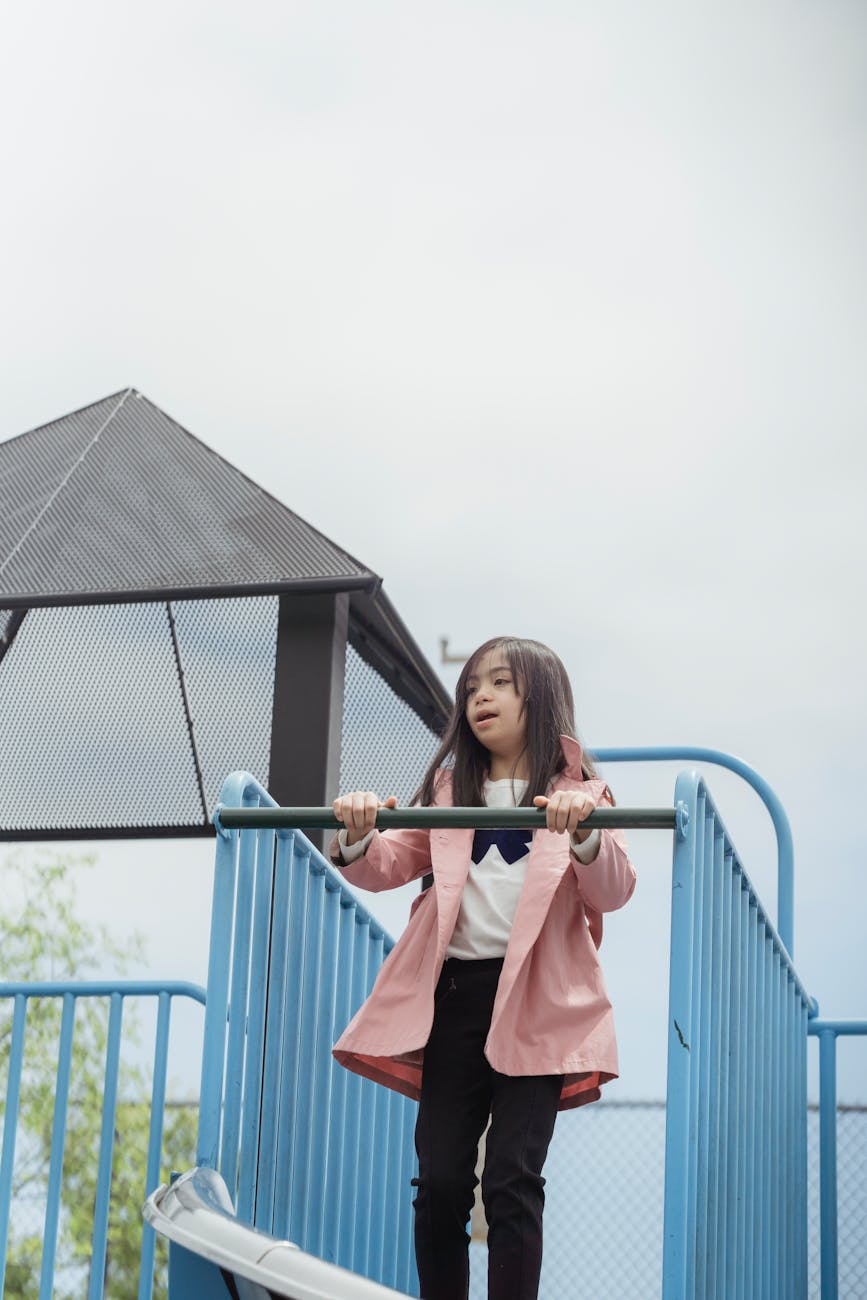
    The apex of the tall metal slide towered over our heads as it breached the clouds. It took forever to climb the stairs to get to the top, and by the time I made it, I looked down at the ground, now comprised of a smattering of colors and moving shapes. I trembled. If I fall…

    I spent the first six years of my life in inland Northern California. During the winter it would rain and then the puddles in the soccer fields would freeze over, creating a smooth, matte surface. My first-grade classmates and I would take turns jumping on the ice until the top layer cracked like a the surface of a creme brulee, soaking our shoes and socks with icy, brown water.

    School rules forbade us from going to the end of the field, where the fence overlooked a large swimming pool with multiple lanes. Whenever the teachers on duty caught us venturing towards the fence, they would grab a megaphone to call us back with threats of yellow cards or (gasp!) red cards.

    On some mornings a thick coat of fog would wrap itself across the field and we kids would mistakenly think it would disguise our presence as we hurried toward the fence, only to hear a teacher’s voice sputter angrily from the megaphone.

    At six years of age, I had already experienced moments of terror and tension at home–getting beaten by my mother, and watching her beat and scream at my dad and grandma. My father groped me but at the time it seemed like a normal thing within the family, under the banner of playful affection from a Chinese father. The weight of this experience wouldn’t catch up to me until later, as I underwent puberty.

    At school, away from hitting hands and groping hands, I was able to enjoy the moment with my friends, exploring the forbidden edges of the world, and pressing our feet on ice to see how much it could hold before cracking. We were bold, we were six.

  • The Perfect Daughter: a short story

    I have successfully molded my daughter into the perfect daughter. She is meek, quiet, and obedient. She goes to school and then comes home to study. That is all a child really needs in life. She used to whine about not having friends, and I told her, what good are friends? Your family is your friends. Your friends don’t pay the bills for you. Your friends don’t buy your clothes or pay for the roof over your head. A little girl shouldn’t be out running around with friends.

    I don’t remember when she stopped whining about it, but the last few years have been peaceful. I think she finally understands what it means to honor your parents. After all, her father and I sacrificed years of our lives working so that she could go to a good college, become a doctor, marry a man from the homeland that we find for her, and have children that we will babysit for her. After everything we’ve done for her, all she has to do is step up to the plate.

    Because her father and I both work full time, I work in the evenings while her father works in the mornings. So she spends most of the afternoons and evenings with her father, until I come home late at night. Her father complains to me a lot about the clothes she wears—that they are too revealing and thin, and that the curve of her nipples are showing through the material. So I buy her baggy clothes from the men’s section of the department store—modest clothes. After all, we tell her, Chinese girls don’t dress like sluts, not like those white and Mexican girls at school.

    Her father is a jokester. He likes to spank her on her butt. She tells him to stop, but I remind her that she is lucky to have such a loving father. Most girls don’t have such a warm and loving father. Sometimes he will pull her into his lap on the couch and give her a nice massage on the back and thighs. I wish he would massage my back. It is sore after my long days at the factory.

    But we know the rest of the world would take this out of context. So I tell her that everything stays within the family. She grumbles but knows better than to defy me. After all, I disciplined her with a plastic clothes hanger throughout her childhood. I stopped when she was fourteen, but I’m sure she remembers, especially when I raise my voice at her. When I see her flinch, I know she remembers our lessons.   

    But today…she threatened to tell a school counselor. She is accusing her father of sexual abuse. Her father was incensed. “How could you accuse me of raping you?” he said. All he did was joke around, how could she accuse him of raping her?  

    That’s right, How dare she! All we have ever done as parents was take care of her. We did our best. We bought her food, we paid for her violin lessons, we paid for her Chinese lessons, we bought her clothes, we gave her shelter. She is the most ungrateful child ever. I am in shock.

    We told all this to her. We screamed this to her until it slowly, finally started to sink in, as her defiance faded into a sullen silence and tears. I explained to her that I had warned her to not wear such slutty clothes—she is in this situation and it is all her fault. I made sure she cried to make sure she really understood. I told her she is wrecking our family for her selfish reasons. Why, because her father didn’t like the way she dressed? All he was trying to do was protect her! Now she is accusing him of rape. Ridiculous, and so incredibly selfish—her betrayal of our family cuts deep.

    We no longer allow her to walk to school. We drive her to and from school, and monitor any and all calls and text messages that go into her phone. I watch her when she takes out the trash, to make sure no one kidnaps and rapes her.

    She cries and refuses to hug me when I hold my arms out to embrace her. I give her lunch money anyway because I love her. She is becoming so Americanized, it is really sad. But marrying a traditional husband from China will help keep the culture alive.

    –EPILOGUE–

    Our plan for her life was all set. That was all she had to do—just go to school, get good grades, go college, get a job as a doctor, marry a Chinese man, and give us grandchildren. She had everything ready to go. She didn’t need anything besides us.

    But she decided to take her life in the bathtub.

    All that money we spent on her. All that work in raising her. All that blood.

    They all went down the drain.

    THE END

  • emerging from the grief cocoon and into springtime

    On the surface I seem to be getting by all right—I go to work, chitchat with my coworkers, wring my hands at meetings, and get things done. Then I come home, I make supper, I hang out and laugh with my husband and cat, and occasionally hang out with friends. The litter box is still changed, the laundry is still run, and the world goes on.

    But if you look closer, you will see that the grief has worn its mark on my face and body—my expression feels heavier, more solemn. I stopped wearing my false lashes. I grew my blond out and cut the colored ends. I stopped styling my hair in the mornings. I’ve pretty much stripped down my morning routine to the essentials. I gained a few pounds. I’ve grown white hairs but I attribute this to regular aging since my dad had a salt-and-pepper head of hair by his mid-thirties.

    During the late night, whenever I get a quiet moment to myself—usually after my husband has fallen asleep…I look into the mirror and see my parents—all the sacrifices, all the guilt, and the feeling of never living up to the ideal, overachieving, pure and chaste, and obedient daughter. Never enough.

    In the beginning I listened to a lot of YouTubers who talk about the dynamics of growing up with narcissistic abuse, such as Dr. Ramani Durvasula and Dr. Jerry Wise. Their videos were immensely helpful to me when I was in the throes of deep guilt and doubt—I kept asking myself, Am I the difficult one for feeling this way? Am I being unreasonable in my decision? Maybe it wasn’t that bad…I mean, it’s not like they left scars on my back from whipping, or broke any bones… Maybe it’s actually quite normal for parents to do those things to their children and demand their secrecy afterward, so maybe it’s actually quite common, but people just don’t talk about it… My brain was playing happy montages of normal moments I had experienced with my parents, as if telling me, See? It wasn’t ALL bad…I had to write down a list of all the things I experienced—Dr. Ramani calls it the “ick” list. Once I looked at the paper, the collection of all the things they did to me, I realized, absolutely not. It was not normal. And even if it were, it was wrong and very fucked up, and they must understand that to some extent if they demand so much secrecy.Subscribed

    A part of me was also scared that I would cave and return to the previous status quo, especially around Christmas. I kept getting nightmares of them showing up at my work, or in our house, demanding to speak to me, telling me about all the sacrifices they had made for me and how ungrateful I am, and downplaying all the things they did to me.

    I feared I wasn’t strong enough to maintain this unnatural decision to divorce myself from my parents. Maybe it would just be easier to go back to pretending we’re a happy family because family is so important to my mom and dad, and family was what they’d used to justify the secrecy. You keep secrets to protect your family, and to do otherwise is to be a homewrecker who is trying to tear the family apart. Other people wouldn’t understand. Only your family can…even though we do not talk about what happened. These were the rules of the house I grew up in.

    Winter was normal in a way, with the usual lovely festivities at the end of the year. But underneath the surface, my mind fell to doom and gloom amid the shorter days. My joy and energy, while present enough to participate and share the experiences with my husband, were stunted by the weight of the estrangement and the resulting loneliness. I withdrew from my outer social circles.

    I am also surprised by how everyday life seems to go on in spite of this inner turmoil. Perhaps I was alone even before the estrangement. I’ve been enjoying my weekends more—spending time with my husband and cat, writing, visiting the library, etc.

    So even though the grief continues beneath the surface, it has not wiped me out the way I feared it would.

    As the days get longer and the sun gets sunnier, I am ready for a change. I called up my hair stylist and I am going to get my hair colored again—I hadn’t done it in two years, and you know what? I think it’s time to move on from Sad Eden Era hair.

    While Dr. Ramani and Dr. Jerry’s videos were crucial in the beginning in helping me understand my feelings and why they were valid, after a while I found that the videos were pulling me back into that place of rage and bad memories, so I started watching other types of videos—writing videos, lifestyle videos, etc.

    Over time I have settled into this new normalcy. The waves are there but they lap quietly at my ankles instead of pushing me off my feet and twirling me in the water.

    I will not forget what happened to me, but I am focusing on my new life: everyday shenanigans with my husband and cat, my novel in progress, my day career, our friends, and all the things in between—soaking in the sunlight during my afternoon lunch breaks, hearing the sounds of the ocean and feeling the grains of sand between my toes, laughing at a silly joke with my loved ones… and maybe one day, I will look into the mirror late at night and see myself and feel enough.