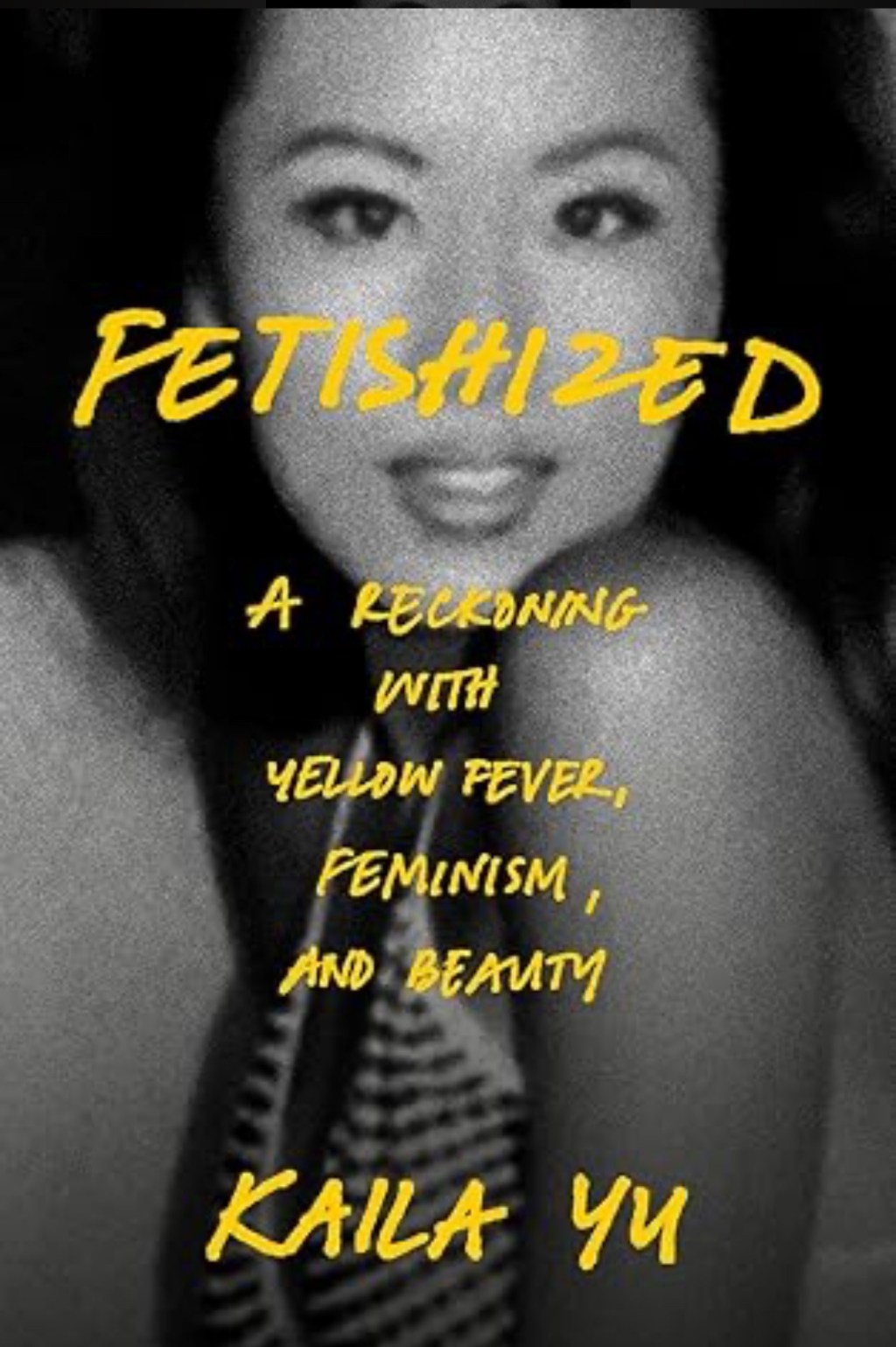
Reading Kaila Yu’s memoir reopened some old wounds I’d been carrying for decades. Like Kaila, I had internalized a lot of messages about the value of beauty and external validation in an attempt to fill the void of self-hatred inside. But unlike Kaila, who was attractive much more successful at romping with the cool Asians, I was a fat, pimply, socially awkward teenager, which really hurt my budding Asian American modeling career (just kidding – I ended up going into more boring pursuits).
During the first part of the book I found myself feeling resentful of myself for not being prettier. The chapter about her getting double eyelid surgery sent me down a spiral in revisiting my young adult years, making me wonder if I should have just gotten the surgery to “fix” my insecurity, and been done with all the anguish.
What I learned from her book is that even if you are able to capture that intoxicating and validating external approval and admiration with your looks, the nature of that accomplishment is so fickle that it is hard to hang on to it—as audiences change their tastes, another new model becomes more popular, or your own looks change or age. Your success and popularity is at the mercy of mostly male consumers, who use you (or the idea/image of you) and then discard you, after their needs have been met or when the next new shiny model comes onto the scene. There is a pressure to chase that admiration, and when you lose it, whether to age, market conditions, or other factors, it is only natural to grieve what you once had.
And also that sometimes the very nature of the entertainment industry or your own success within it—can trap you. Kaila’s early success with using the Asian fetish for her own career and ego gains ended up boxing her in later in life, as she sought to escape being associated with that, but kept finding herself being pulled back in, because channeling the fetish was what garnered more success with audiences than the other type of work (less centered around Asian fetish) that she wanted to do.
In chasing beauty, she had thought she’d be celebrated but what ended up happening was that “my true self was erased, and I existed only for the consumption of men…My body was not entirely my own. I hoped to one day reclaim it.”
It was really interesting to read about the import model scene from Kaila Yu’s experienced and honest insider perspective. I was too young and sheltered to participate in it myself but have met Asian Americans who’d participated in that scene, who revel in their memories of the cool cars and hot import models, but they have a hard time remembering who was who. It goes with the experience of being adulated as a model and also feeling interchangeable.
While reading about all the cool clubs and experiences that Kaila had access to due to her success and beauty, I felt really jealous and resentful at first (“dang, all of this sounds so fun and glamorous. if only I were prettier”) but this is really stemming from my own internalized messages, the root of which is the idea that maybe I would have been more accepted by my peers and especially other Chinese Americans if I had been prettier. But this is a message that comes from my low self esteem. “Asian fetish tropes reduce Asian women to flimsy caricatures,” writes Kaila, “but there is no denying the validation it satisfies for certain damaged women. Although the Asian fetish is degrading, feeling desirable when you’re vacant of self-worth is acutely compelling.”
The parts of the book that made me change my mind about the grass being greener were the parts about the exhausting musician touring schedule, the relentlessly creepy advances from middle-aged weirdos who only saw what they wanted to see rather than the real her, the cutthroat competition between Asian Americans in the entertainment industry (modeling, acting, etc.) for the scant number of opportunities available and the backstabbing relationships that result from such a zero-sum environment. They all took a toll on her mental health.
As a result of her journey to find a sense of self worth independent of external validation, Kaila writes, “Instead of being driven by shallow, ego-based exteriors, I want to cultivate deep bonds of friendships and meaningful relationships…I’m so grateful my looks have no impact on my current career.”
Her message to young women today is that we have a much better range of Asian American representation in popular media today, than when she was younger, where Asian female roles were limited to dragon lady or china doll stereotypes. She also acknowledges the role she herself played into these stereotypes with her career when it benefited her. “I hope young women today will make better choices and, by sharing my imperfect, damages; and yet hopeful story, more young Asian women recognize their multifaceted beauty, focusing on inner strength over physical appearance.” As someone who carried these old wounds within me for most of my adulthood, this was the message I especially needed.
Rating: 5/5 stars
If you are interested in checking out Fetishized by Kaila Yu, see the below links:
 Eden Onpeng
Leave a comment