Month: September 2025

  • We Were Bold, We Were Six

    We Were Bold, We Were Six

    The apex of the tall metal slide towered over our heads as it breached the clouds. It took forever to climb the stairs to get to the top, and by the time I made it, I looked down at the ground, now comprised of a smattering of colors and moving shapes. I trembled. If I fall…

    I spent the first six years of my life in inland Northern California. During the winter it would rain and then the puddles in the soccer fields would freeze over, creating a smooth, matte surface. My first-grade classmates and I would take turns jumping on the ice until the top layer cracked like a the surface of a creme brulee, soaking our shoes and socks with icy, brown water.

    School rules forbade us from going to the end of the field, where the fence overlooked a large swimming pool with multiple lanes. Whenever the teachers on duty caught us venturing towards the fence, they would grab a megaphone to call us back with threats of yellow cards or (gasp!) red cards.

    On some mornings a thick coat of fog would wrap itself across the field and we kids would mistakenly think it would disguise our presence as we hurried toward the fence, only to hear a teacher’s voice sputter angrily from the megaphone.

    At six years of age, I had already experienced moments of terror and tension at home–getting beaten by my mother, and watching her beat and scream at my dad and grandma. My father groped me but at the time it seemed like a normal thing within the family, under the banner of playful affection from a Chinese father. The weight of this experience wouldn’t catch up to me until later, as I underwent puberty.

    At school, away from hitting hands and groping hands, I was able to enjoy the moment with my friends, exploring the forbidden edges of the world, and pressing our feet on ice to see how much it could hold before cracking. We were bold, we were six.

  • After the Glitter: a short story

    After the Glitter: a short story

    This is what happens when you peak in high school, thought Vanessa Phan, looking at a photo of herself and her friends from the late ‘90s. I fit into size 00 Guess jeans back then, she mused, as a wave of bitterness washed over her. I ruled the quad with Jenna Tran and Ana Xayavong. Boys adored us. The possibilities were endless.

    She was smoking in her car with her windows rolled down in the parking lot of a strip mall. She checked the time and rolled her eyes, leaning back against her torn leather seat. “Eight more fucking minutes,” she muttered under her breath. Her former coworker, Tina, had left to become a CNA at a senior home nearby. Vanessa’s new coworker, Patty, was nice and all, but kept making mistakes with the register that Vanessa had to fix.

    She looked at herself in the rearview mirror. I was beautiful once. But now, shadows grew under her eyes. Wrinkles were starting to form on her forehead—and she was too broke to afford Botox, Dysport, or whatever else people with too much money were injecting into their foreheads these days. She looked like a faded, tired version of who she once was.

    Vanessa worked at a chain dollar store in a small, shithole town in the middle of Dusty-Ass California—no, not the cool beachy side or even the cool foresty side, but the side that was as hot as a furnace much of the year. But at least it was not the one she graduated from. That would be too humiliating. From Facebook, she knew that Ana had gone on to earn her cosmetology license and now worked at a salon cutting hair. Jenna went to community college and became an LVN at a big hospital. And Vanessa? Well, her life took a detour after high school.

    She never told anyone from school, but her father would snoop.through her underwear drawer and ask her questions about it. And she would hear him checking her bedroom doorknob at night. One night she forgot to lock it and woke up to see him hovering over her from the side of her bed, with his right hand moving inside his gray pajama pants.

    After graduating from high school, she moved in with her 23-year-old boyfriend named Peter and hung around with him and his friends. Pete was in a gang and he didn’t talk much about it with her, only that it was better the less she knew, and she never pressed him for more information. During the week, she would work at a pizza shop. On the weekends, she would go out clubbing with Pete and his friends.

    A breeze of hot air from outside blew her brassy blond hair into her face. She was long overdue for a hair trim—her parched hair was plagued by split ends. Her nails—well, she gave up on regular manicures and pedicures a long time ago. But it’s not like she was clubbing or raving these days.

    But it was so fun while it lasted.

    A ghost of a smile crept into her lips as she took another drag from her cigarette.11 PM felt like a beginning of many fun possibilities; 5 AM felt like death, as she was coming down from the ecstasy. But in those sacred hours between 11 PM and 2 AM, the world was magic. The music and bodies melted into each other with warmth and movement. Sound waves swirled around her as the deep bass beat in rhythm. As the high coursed through her body, she felt at one with the world. Infinite.

    Then the morning would come. Her glitter and sequins, which had felt like magical shimmers the night before, felt garish and bleak in the unforgiving light of dawn. Her throat was parched, her makeup was peeling, and her head throbbed. She would hide from the world in Pete’s dingy bedroom with the curtains shut, trying to be as quiet and still as possible. Is this all it will ever be? a small voice in her head would ask.

    One day, she received a phone call from the police. Pete had been found in a ditch with two gun wounds in his back. The cops wrote it off as gang-related and left it at that. Of course the cops didn’t bother to do a thorough investigation, she thought bitterly. They didn’t give two shits about him. Vanessa cried at his funeral, along with Pete’s friends. Even though they’d had a rocky relationship towards the end, they had also had a lot of good memories together.

    After Pete’s death, as she lay in their bed and listened to the overhead fan creak in the ceiling, she reflected on their relationship and realized she had overlooked a lot of things when Peter was still alive—his temper, and how he had punched two holes in the bedroom at separate times during their relationship. One time it was because she kept confronting him about a girl named Angel who kept texting him late at night. The other time it was because a handsome waiter made a joke about the menu and she had laughed back. “Look what you made me do,” he said, as the holes in the wall gaped and cracked. He would also get very close to her and punch the air around her head. Maybe one reason she’d been so willing to overlook these things was because she had nowhere to go. She didn’t want to go back to her father. She didn’t want to leave Peter and the life they had shared together, outside of those rage episodes.

    She felt bad for remembering these things. It felt like she was tarnishing the image of him as her hero, the one who pulled her away from her creepy father.

    But his death had given her another point of clarity. In the haze of the clubbing and raving, she and her old friends from high school had grown apart. Their friendships had withered away and now it felt weird to text them out of the blue.

    Then she’d found out she was pregnant.

    Although she had never truly joined the gang or participated in running its businesses, she still wore the gang colors when going out with Pete and his friends. One could say that she was affiliated, even if she wasn’t a direct member. People knew she was with Pete.

    She didn’t feel safe in this town anymore. She quit her job at the pizza shop and found an apartment about two desert towns away, which came with a roommate—an older lady named Janice who worked as a lunch lady at a nearby elementary school—and a job at a dollar store. The owners of the dollar store were cheap and there was no air conditioning (only an old, rattling fan), but a shitty job was better than no job.

    She had packed all her belongings in her beat-up car and driven down the freeway on a quiet Sunday morning. During the drive, her thoughts drifted as she drove along the desert landscape. Sometimes her free hand would go to her lower belly, where baby Daniel was a little tadpole curled up inside.

    When Tommy was born and the nurses plopped him onto her chest, she touched his little hands and little face and couldn’t believe that such a precious thing had come from her and Pete.

    And now she was out here with little Tommy, in The Middle of Nowhere, California. It was hot and boring here, but at least she felt safe.  She’d gone to the small town’s resource and referral agency, which had given her a list of low-cost daycare options, including CalWORKS and Early Head Start, which Vanessa somehow miraculously qualified for. She would be picking Baby Tommy up after her shift today, like she does every day.

    Her phone alarm went off. She turned it off and took one last drag of her cigarette before opening a root beer bottle and dropping the cigarette inside, where it joined a forbidden stew of old root beer and other cigarette butts—a melting pot of tar soup. She looked back at the baby car seat through her rearview mirror. I should quit, she thought.  She shook the bottle to drown the cigarette butt and placed it back down beneath the passenger seat.

    Her hand caught on something beneath the seat. She pulled it out.

    It was a college brochure she had pulled from the mailbox yesterday, that she’d forgotten to take out of her purse. She flipped through it. There were the usual offerings of the nursing degrees, but she saw a program for Certified Nurse Assistant. Her former coworker Tina had left the store to become a CNA, saying the pay was better and that training didn’t take very long, even if the work was harder.  Maybe she could text her tonight to ask about how things were going.

    Vanessa wasn’t sure if this CNA path was the right fit for her, or if there was anything out in the world that she was “meant” to do like those sappy people talk about in inspirational videos.

    She didn’t want to work at the dollar store for the rest of her life, especially since the owners were thinking about raising the prices to $1.99, something about tariffs. A few months ago they had already raised the prices to $1.50—which had already hurt business, as customers grumbled to her about how Walmart was cheaper now.

    Tommy was too little right now for Vanessa to work and go to school, but maybe when he was a bit older, she could figure out some daycare options to take classes in the evening.

    Right now she was barely making ends meet—having a roommate and using state programs for daycare and food assistance was helping her and Tommy survive, and she had squirreled away some savings when she was still living with Pete. But now she and Tommy could really use that extra cushion. Even if CNA wasn’t the right program for her, the local community college still offered other types of careers. She imagined herself working in an air-conditioned hospital, with the fresh smell of sanitizer and clean walls and floors. She pictured herself typing away on a computer in an office (also air-conditioned), with a stylish little bag next to her, and being able to buy nice things for Tommy.

    She tucked the brochure back in her bag and locked the car. As she walked back towards the dollar store, she found herself smiling.

  • Cool Asian Americans: on double eyelids, belonging, and learning not to measure worth by beauty

    Cool Asian Americans: on double eyelids, belonging, and learning not to measure worth by beauty

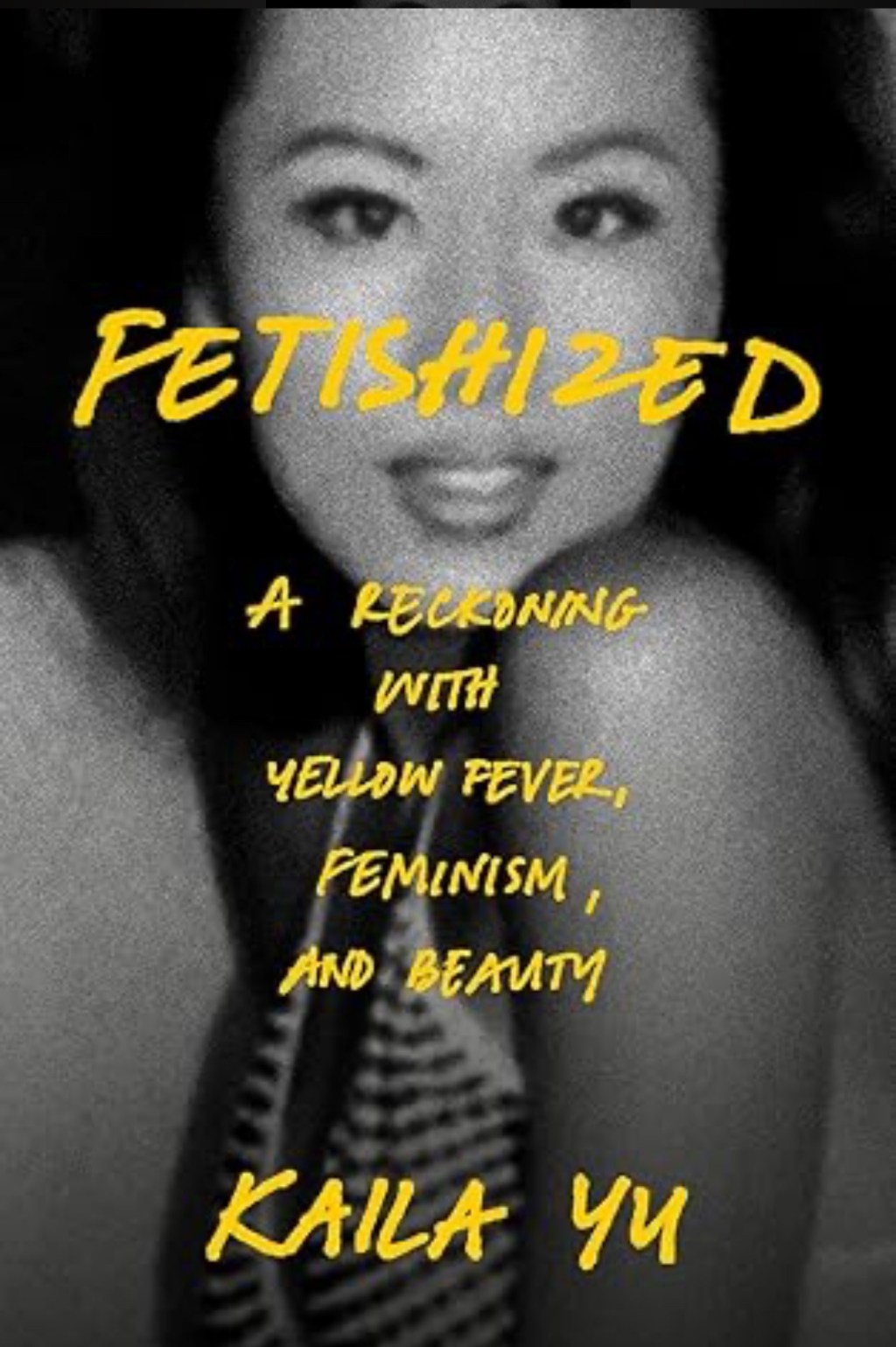
    While my body fights off this uncomfortable cold, I will share a little something with you that I scribbled down recently after reviewing Kaila Yu’s memoir, Fetishized. This is a vulnerable reflection about my own personal relationship with feeling beautiful as an Asian American.

    ***

    Cool Asian Americans. Import cars, pinup models, house parties, clubbing, and raves…This was a scene I never belonged to as a young Chinese American, partly because my family lived far from other Asians.

    I grew up near the border. The only times I saw other Chinese Americans was during the weekends, when my parents would make the long drive to the Chinese-Vietnamese supermarket in City Heights, and drop me and my brother off at Chinese school held on the second floor of a Buddhist temple.

    The other reason was because I was fat, ugly, and socially awkward. Of course, it didn’t help that my home environment was stifling and oppressive.

    Kaila Yu’s memoir stirred up old pain and feelings of envy in me, and I am ashamed to admit this. I found myself envying her freedom to sneak out at night and party with friends (clearly her parents weren’t as scary as mine), her beauty, and especially her outgoingness and success with making friends with the cool Asian crowd–the very types of people that excluded and made fun of me in Chinese school.

    But despite these differences between us, I found her inner experience very relatable because of how she used beauty as a tool or standard by which she could obtain that external validation she craved, in order to fill the void of self love within her.

    I found myself comparing us in our respective journeys toward self-love and acceptance, and decided to use her life story as a launching pad from which I could explore my own. 

    She and I were opposite sides of the same coin – deep down we both yearned to belong, to find social approval, and to be loved.

    While Kaila was slim, beautiful, and roamed San Gabriel with the cool party Asians, I was an obese, pimply teenager saddled by heavy AP textbooks, stuck inside my parents’ house because they wouldn’t let me go out. Where her father ignored her, my lecherous father paid me too much attention. Where her mom seemed supportive of some of her choices, even recommending plastic surgeons for her, I endured my mom’s rages, unable to hide because I wasn’t allowed to leave the house without a chaperone.

    The brief experiences with cool Asian Americans that I met at Chinese school and while volunteering in Taiwan (AID Taiwan 2007) were laced with pain and exclusion. As I mentioned earlier, I was overweight and riddled with acne, I didn’t wear the cool shoes or the cool brands, and I didn’t have the charm or social skills to navigate through social situations with unspoken rules. 

    Volunteering for a month in Taiwan to teach a English to kids in disadvantaged towns was a nightmare for the overly sheltered introvert I was, who went from spending most of my time studying and reading at home after school to being surrounded by hundreds of outgoing and outspoken Taiwanese- and Chinese-American teenagers with practically zero time to myself. I felt like I had to be “on” all the time. It was exhausting. I ended up dissociating a lot, even on stage when I was supposed to speak. 

    I was sitting alone in between activities one day during volunteer training when I overheard another volunteer say to his friend, “She doesn’t know how to suck up to people. That‘s why she has no friends.” 

    That line cut me deeply, because it felt true, I was shy and had a hard time talking to people, let alone flattering them. It was so painful to have my very insecurity identified and voiced by someone else. 

    I tried to be nice to him nonetheless, to turn the other cheek, to prove him wrong about not being able to suck up to people. We made eye contact through the bus window at some point. I waved at him. He just stared back at me coldly, like I was nothing more than a pimple, unworthy of his friendship.

    Sometimes when I’m laying in bed at night, that volunteer’s words haunt me and I feel like hurling myself down a deep chasm in the ground and staying there forever.

    While training and volunteering, I saw how the little kids at the schools and other volunteers admired the prettier girls who had the slim bodies and big eyes. They were treated with a sort of kindness and interest that I envied. I wanted to be liked that way, to navigate the world with beauty and ease. 

    From those experiences I came to the same conclusion as Kaila: that beauty and status are important and must be chased. Kaila was much more successful at being beautiful, and much more adept at navigating social situations.

    The silver lining of being fat is that the extra fat gave me some decent B cups, so I didn’t stress as much about my breasts, except for when my dad would leer at them and ask me if I was wearing a bra. He did this into my early 30s, until I estranged myself from my parents for other reasons. 

    My Obsession with Double Eyelids

    After that volunteer trip, I became obsessed with double eyelids and the fact that I did not have them. It didn’t help that I was told I had small, slanted eyes my whole life, from both racist kids at school and also well-meaning friends (“your eyes are so chinky!” a Filipino friend had exclaimed to me back in middle school). I looked at the kids at my Chinese school who had bigger eyes, and told myself, If only you had bigger eyes. You wouldn’t have gone through all that bullying about having small, slanted eyes. You would have been accepted by the other Chinese Americans at Chinese School. People would have treated you better. You would have been beautiful.

    I became obsessed with getting larger eyes. I repeated to myself my conclusions that if I had prettier eyes via a crease on my eyelids, maybe my life would be different. Maybe I would be treated better by other Chinese people. Maybe I wouldn’t have been bullied as much for the shape and size of my eyes as a kid. Maybe I wouldn’t have felt so alone. 

    I learned how to use double eyelid tapes and glue to temporarily achieve that crease on my eyelids, and once had a terrible experience when I tried using Nexcare, a liquid antiseptic bandage instead of eyelid glue, figuring that an even stronger glue would lead to stronger results (and totally ignoring the label warning to KEEP OUT OF EYE AREA). The burning in my eyes was a temporary trip to beauty hell, a painful punishment for my vanity. I was spared a trip to the ER by rinsing my eyes with lots of water.

    I never ended up getting the double eyelid surgery, partly because of the cost and the recovery time (I have a lot of fat in the eyelid so an incision would likely be necessary), and partly because of the principle. A small, morally defiant part of me felt that if I got the surgery after all the fuss I’ve made about Asian beauty standards, then all the people who made me feel like shit for the way I looked would win.

    It’s weird: I felt more self-conscious about my monolids around other East Asians than I did around non-Asian people, who didn’t seem to understand the concept of a crease or double-eyelid unless the surgery was very drastic. Since I didn’t hang out with a lot of East Asians, I wasn’t as frequently triggered.

    But sometimes I do wonder what my life would have been like if I’d gotten it. Maybe it would have made me finally confident, like the way post-surgery people sound in their testimonials (“I feel so confident now!”). Or maybe not. Maybe I would’ve continued being the same person with the same insecure struggles, only with a line on my eyelids and $3,000-$5,000 poorer. Maybe I would want to fix my nose or jawline next.

    The Fleeting Nature of Beauty and Social Approval

    Kaila’s book reflects how popularity, status, and social approval is fragile, fleeting, and hard to maintain, no matter how successful we’ve been at obtaining them. When Kaila’s sex video (the one for which she was coerced into) went viral, her guy friends not only watched it as a group but then some of them defriended her afterward—a huge WTF for me. Being beautiful didn’t make her immune to experiencing trauma or a social fallout.

    Throughout my young adult and new adult years, I flagellated myself for not being pretty enough, for not being charming enough, for not having the social skills to navigate social situations. Deep inside I was telling myself that my life would have been less shitty if I were prettier.

    I was spending too much time on social media, too much time gazing at doe-eyed actors on Taiwanese soap operas, and too much time contemplating perfection as depicted in magazines. I was yearning for acceptance from the wrong type of people, people I likely wouldn’t click with anyway, where even if I did manage to grab ahold on some clout for a little while, it wouldn’t last. It would feel hollow because I would be trying to mold myself into an image of beauty rather than being a self I was comfortable in. 

    Part of my self-dissatisfaction was from wanting to be the type of person that enjoyed certain things. I didn’t really enjoy crowded environments (unless my senses were numbed by alcohol or drugs) but wanted to be the type of person who enjoyed those glamorous events, from EDC to raves. When my current partner didn’t want to go to EDC or a rave with me (he’d done so in his youth and was over that phase), I told myself it was because I was too ugly for him to take to EDC or raves, and that if I were prettier, he would be more down to go with me.

    With each rebellion and plastic surgery, Kaila slowly distanced herself from her old self (Elaine Yang) whom she described as shy and nerdy–the one her father didn’t pay attention to. And yet, over time, her new persona (born from people’s expectations due to her success as a sexualized and fetishized pinup model) became exhausting to maintain. She struggled with trying to manufacture a sense of sexual ease she didn’t naturally possess. And after some traumatic experiences, she’d had a hard time getting back in touch with her own body and enjoying her sexuality on her own terms. The latter part of her memoir is about exploring what she can do outside of the context of her looks, and sometimes being pulled back into that old context anyway because of her past, and also because of how popular fetishization is with audiences.

    With my current partner I very briefly explored a fun, party-girl side of myself with the fake lashes, the cocaine, and the parties, but have since mostly gone back to my introspective, creative, and bookish roots, partly due to being in my thirties, working through trauma, my sister’s suicide, and being pregnant and shifting into a new phase of my life.

    But every now and then I would come across something that brings me back to those self-resentful feelings of not being enough–pretty, smart, charming, etc. Unlike Kaila, I got to the point where I could make a living based on my looks. I yearned so much to be beautiful enough to be paid for my looks, like stripper-hot or Cafe Lu-hot, the kind of beauty that guys admire or revere when they talk to each other about the girls they’ve known.

    At this point it is just a form of self-torment, but it has gotten easier now that I am in my mid-thirties. I don’t relate to the grief that some feel when their pretty privilege fades and they can no longer charm themselves out of a driving ticket, skip the line to enter an exclusive club, or make every man’s head swivel whenever they enter a room. The silver lining to being plain for all of my life is that since I never had these privileges, I cannot lose them.

    I wish there was a special word I could use to end this spiral and insecurity forever. Like, “Abracadabra! Now you won’t give a shit about this stuff anymore!” (I’ve tried it, but it didn’t work.)

    I still avoid watching East Asian soap operas like K-dramas and Taiwanese soap operas because my mind gets pulled back into that idealized world where the main character (the special one!) is always the one with the big, beautiful, double-eyelids, the 100-pound frame, and the delicate, v-shaped jawline. I wish I were strong enough to resist being triggered but the fact is that East Asian pop culture is a trigger for me, so I do other things to pass my time.

    These days, to cut myself out of this thought-spiral of beauty-is-everything, I get off of social media, and go to Walmart or the park to look at regular, everyday people going about their lives, without the glamorous filters skewing things. Yeah, there are some good-looking people and some not-so-good-looking people. And in my life there are people I love and cherish who don’t fit in that stripper-hot box either, like my grandma–are they less valuable as human beings because they are not sexy? Of course not. So why am I using that standard to hurt myself?

  • Books I’ve Been Reading: Fetishized by Kaila Yu

    Books I’ve Been Reading: Fetishized by Kaila Yu

    Reading Kaila Yu’s memoir reopened some old wounds I’d been carrying for decades. Like Kaila, I had internalized a lot of messages about the value of beauty and external validation in an attempt to fill the void of self-hatred inside. But unlike Kaila, who was attractive much more successful at romping with the cool Asians, I was a fat, pimply, socially awkward teenager, which really hurt my budding Asian American modeling career (just kidding – I ended up going into more boring pursuits).

    During the first part of the book I found myself feeling resentful of myself for not being prettier. The chapter about her getting double eyelid surgery sent me down a spiral in revisiting my young adult years, making me wonder if I should have just gotten the surgery to “fix” my insecurity, and been done with all the anguish.

    What I learned from her book is that even if you are able to capture that intoxicating and validating external approval and admiration with your looks, the nature of that accomplishment is so fickle that it is hard to hang on to it—as audiences change their tastes, another new model becomes more popular, or your own looks change or age. Your success and popularity is at the mercy of mostly male consumers, who use you (or the idea/image of you) and then discard you, after their needs have been met or when the next new shiny model comes onto the scene. There is a pressure to chase that admiration, and when you lose it, whether to age, market conditions, or other factors, it is only natural to grieve what you once had.

    And also that sometimes the very nature of the entertainment industry or your own success within it—can trap you. Kaila’s early success with using the Asian fetish for her own career and ego gains ended up boxing her in later in life, as she sought to escape being associated with that, but kept finding herself being pulled back in, because channeling the fetish was what garnered more success with audiences than the other type of work (less centered around Asian fetish) that she wanted to do.

    In chasing beauty, she had thought she’d be celebrated but what ended up happening was that “my true self was erased, and I existed only for the consumption of men…My body was not entirely my own. I hoped to one day reclaim it.”

    It was really interesting to read about the import model scene from Kaila Yu’s experienced and honest insider perspective. I was too young and sheltered to participate in it myself but have met Asian Americans who’d participated in that scene, who revel in their memories of the cool cars and hot import models, but they have a hard time remembering who was who. It goes with the experience of being adulated as a model and also feeling interchangeable.

    While reading about all the cool clubs and experiences that Kaila had access to due to her success and beauty, I felt really jealous and resentful at first (“dang, all of this sounds so fun and glamorous. if only I were prettier”) but this is really stemming from my own internalized messages, the root of which is the idea that maybe I would have been more accepted by my peers and especially other Chinese Americans if I had been prettier. But this is a message that comes from my low self esteem. “Asian fetish tropes reduce Asian women to flimsy caricatures,” writes Kaila, “but there is no denying the validation it satisfies for certain damaged women. Although the Asian fetish is degrading, feeling desirable when you’re vacant of self-worth is acutely compelling.”

    The parts of the book that made me change my mind about the grass being greener were the parts about the exhausting musician touring schedule, the relentlessly creepy advances from middle-aged weirdos who only saw what they wanted to see rather than the real her, the cutthroat competition between Asian Americans in the entertainment industry (modeling, acting, etc.) for the scant number of opportunities available and the backstabbing relationships that result from such a zero-sum environment. They all took a toll on her mental health.

    As a result of her journey to find a sense of self worth independent of external validation, Kaila writes, “Instead of being driven by shallow, ego-based exteriors, I want to cultivate deep bonds of friendships and meaningful relationships…I’m so grateful my looks have no impact on my current career.”

    Her message to young women today is that we have a much better range of Asian American representation in popular media today, than when she was younger, where Asian female roles were limited to dragon lady or china doll stereotypes. She also acknowledges the role she herself played into these stereotypes with her career when it benefited her. “I hope young women today will make better choices and, by sharing my imperfect, damages; and yet hopeful story, more young Asian women recognize their multifaceted beauty, focusing on inner strength over physical appearance.” As someone who carried these old wounds within me for most of my adulthood, this was the message I especially needed.

    Rating: 5/5 stars

    If you are interested in checking out Fetishized by Kaila Yu, see the below links:

    Amazon

    Barnes & Noble

    Kobo

    Bookshop.org

  • Nicole Kidwoman and Her Dream Son: a short story

    August 2025

    Mary bit into her $1.50 hot dog as she stationed herself at one of the red picnic tables outside a Costco. In this age of skyrocketing grocery prices, the $1.50 hot dog was one of the last holdouts from a simpler time.

    She eyed the purchased eggs in her cart with disapproval. Eggs were once lauded by frugal cookbooks as a cheap protein, the holy grail of poor people and large families.

    Not anymore, she thought. She couldn’t remember exactly how or why eggs became so expensive, even after the bird flu or whatever wiped out those eggs the first time, but she had a feeling it was probably the liberals.

    The other red picnic tables in the food court were filled with families with baby strollers, shopping carts, and the occasional pigeon or two. Opportunistic, thought Mary, watching two pigeons fight over a pizza crust. And who wouldn’t be, in times like these?

    Five years after the onset of the pandemic in March 2020, the era of face masks, hand sanitizers, and six-feet-apart social distancing now felt like a bad dream.

    She had survived the Great Toilet Paper Panic of 2020, when supply and distribution lines were disrupted, leaving store shelves empty and depriving the hardworking American people of a crucial element of life: toilet paper.

    May 2020

    She had never been more relieved to see toilet paper.

    Mary had lined up outside the department stores before dawn to get a crack at the toilet paper. She had screamed, flailed her arms, and shoved her way through the throng of facemask-donning people heading toward the stacks of toilet paper.

    Although she was a petite and scrawny 5’0” middle-aged lady with mousy brown hair tied back into a neat ponytail, she managed to sharp-elbow a thick woman (Latina, probably, figured Mary) aside to grab a unit of toilet paper – a generous block of 30 Kirkland 2-ply toilet paper rolls, sealed together with plastic.

    “Fuck you, bitch!” cried the woman, who had fallen to the ground on her generous tush. “My family needs that!”

     “It’s not all about you, you know,” Mary piped as she pushed her cart quickly away before the woman could reach up and pull the block of toilet paper off the cart. “Maybe you wouldn’t need so much toilet paper if you stopped eating all that Taco Bell.”

    Mary hated Taco Bell. She had made the mistake of eating at a Taco Bell next to a mortuary once, which ended in food poisoning that lasted two weeks, and her having to discard her favorite pair of funeral underwear (it was beyond saving).

    Back at home, two unopened blocks of 30 Kirkland 2-ply toilet paper rolls sat on Mary’s shelves, still sealed together with plastic. But in these uncertain times, Mary felt she needed to stock up. It was unclear how long the supply chains were going to be disrupted.

    Guilt fluttered in her chest as she pushed the cart into the bread section and thought of that woman’s family, but she quickly dismissed it. It wasn’t her fault that these women were underprepared.

    And judging from their looks, they were probably illegals (pronounced “eel LEEgals”) with huge families at home. She smiled to herself through a veneer of cherry Chapstick. The President had promised to stop those damned eel-leegals from invading America—by building the Great Wall of America, with each piece of the wall yet another point in America’s crown. But that was only half the battle. It was only a matter of time before America would be cleaned up from the eel-leegals that were already here. 

    August 2025

    After finishing her hot dog, Mary drove home in her white hatchback Yaris. After unloading and putting away her groceries and her spoils of war, a fresh block of toilet paper, she boiled water for tea, twisting the finicky stove igniter several times until sparks flew and a scratchy, blue and orange flame flared. Placing her hot Lipton tea on a coaster on the coffee table, she sat on the couch and turned on the television. Nicole Kidman came on the screen with a tight, shiny forehead and frozen eyebrows. Mary liked Nicole Kidman, with her voluminous blond hair, alabaster skin, and icy, blue eyes. Kidman reminded her of a time before the movie studios started pandering to D-E-I people with all this woke-ism. It was no wonder theaters were struggling these days. There was a time when most actors in Hollywood were white—the way it should be, thought Mary.

    The afternoon slipped by as Mary watched television in her beige living room. As with many things that one became accustomed to in one’s surroundings, Mary barely noticed the little knickknacks or dusty, framed photographs on the wall.

    But today, as Netflix broke into yet another unstoppable 75-second commercial, her gaze wandered to the wall.

    One of these framed photographs was taken in the ‘90s, featuring herself, her late husband Ted, and their lost daughter, Anne. They had taken the photograph at a department store’s portrait studio department—Sears, perhaps. Ted had worn his gray Sunday suit and combed his brown hair to the side as he always did for work and church. On his wrist was his trusty old Timex watch with the wide face and Roman numerals. At that time Mary had big, permed brown hair with blow-dried bangs curtaining her forehead and doll-like blue eyes rimmed with dark lashes. And sweet, little Anne, she must have been five or six at the time, she was wearing a tartan plaid dress and her wavy blond hair was accented with a large green bow. Anne sat on a stool while Mary and Ted flanked her on both sides and smiled in front of a brown, textured backdrop.

    Oh, Anne, thought Mary to the photograph. You were so perfect, with your beautiful blue eyes and your lovely blond hair. You were a perfect little girl.

    Why did you give it all away?

    Anne was gone now.

    In Anne’s place was now Angelo, her “son.”

    Mary’s wistful smile gave way to a frown. “Where did I go wrong?” she whispered to the photograph. Perhaps she should have made a bigger point to insist on Anne coming with her and Ted to church. Anne would sometimes stay home to play computer games. Perhaps Mary should have pushed Anne to wear more dresses and banished those ugly oversized T-shirts and baggy cargo pants from the house later in Anne’s childhood, as Anne began to shop for her own clothes.

    “No. Ted and I did our best,” said Mary, nodding firmly as yet another commercial began. And how many damned commercials does Netflix have these days?

    As a cheese commercial played, Mary’s thoughts wandered to the moment her sweet, beautiful daughter became a son. She wrinkled her nose. “If God wanted me to have a son, he would have given me one to begin with.”

    November 2010

    Her daughter had gone to college a few hours away from home. And then she’d come home with her beautiful blond hair shaved short like a boy’s, wearing a sports jersey and cargo shorts, and a flat chest.

    “You—what happened to you?” sputtered Mary.

    “Mom, Dad,” said Anne, her voice shaking. “I’m transitioning. You’ve seen me struggle all throughout my life. I’ve always been a man and now I’m finally living as I truly am.” 

    “And why didn’t you say anything to us? Why did you tell us anything before you went ahead and chopped off your hair and breasts?”

    “I’ve been telling you all this time!” exclaimed her daughter-who-was-now-a-son. “I’ve always told you I’ve never quite felt right. All you told me in return was that I would grow out of it.”

    Mary did vaguely remember such conversations, but her impression at the time had mostly been of Anne whining about not liking dresses and being petulant about closing her legs when sitting. They had gotten into lots of arguments over Anne’s insistence on wearing boys’ clothing.

    Mary had entered Anne’s room many times during her adolescence under the banner of cleaning it. She’d found and thrown away a lot of Anne’s boy’s clothing, and read Anne’s diaries, photo booth strips, personal letters that she’d tucked away inside old binders—some were even love letters from girls! She tossed them out and chalked it up to a silly phase that Anne would soon outgrow.

    You think you’re so slick, Mary had thought. But no one outsmarts me in my own house. Whenever Anne asked where a particular garment was, Mary would widen her eyes and shake her head cluelessly.

    “Did you chop off or bind your chest?” Mary asked, enraged. What a waste of God’s gifts. A blasphemous waste!

    “That’s none of your business, Mom,” said Anne.

    “I gave birth to you and your chest, that is my business!”

    Ted in the meantime, had been drinking coffee or whatever he liked doing, Anne’s memory wasn’t too clear on that little part now. He shook his head at no one in particular and walked to the bedroom, leaving Mary and Anne on their own in the kitchen.

    Mary glared at her wayward child. She stared at her up and down, appraising how flat her chest was, how rough the skin on her face looked.

    “I changed my name. My legal name is now Angelo Williams.”

    “Angelo?” cried Mary. “I can’t keep up with you anymore. Not only are you a boy, you’re now Latino too?”

    “Angelo comes from Anne!”

    “No, it does not! If you wanted a boy’s version, you would have gone with Andrew!” Not that Mary would have approved anyway.

    “I guess you’re right. Maybe I just liked the sound of ‘Angelo.’”

    What would people think, thought Mary with horror. How would she be able to explain it to everyone—from her and Ted’s church friends to their extended family members?

    “You bring shame to our family,” said Mary, shaking her head while looking up and down at her child. “After everything your father and I have sacrificed for you. After everything God has given you. You spit at us. You spit at all of us!” She admitted it to herself then: she had been in denial of her daughter’s struggle. And now it was too late to bring her daughter back in line.

    A realization came to her: maybe her daughter had been “transitioning” for a while and only kept up appearances at home—lying to Mary and Ted. That would explain why Anne had so many boys’ clothes that she never seemed to wear.

    “I never asked for any of this!” replied Anne.

    “How are we going to explain it to everyone?” continued Mary. “Our once-beautiful daughter is now a TOTAL ABOMINATION!”

    “Is that what I am to you, Mother?” Anne asked quietly.

    “We gave you everything,” said Mary, beginning to cry. “You chose to throw it away.” She felt so betrayed, in realizing that Anne had waited until she was at college before transitioning—when Mary and Ted were helpless to do anything about it. Had Anne transitioned during high school, Mary knew of some camps that seemed to have fixed the “gay” problem for the children of a few friends from church…

    She stopped sniffling for a moment. There was one remaining option: the ultimatum. “You stop all this nonsense. Or we are cutting you off. No more college. No more support.”

    “I see,” said Anne.

    That night, Mary heard some furniture moving around. She went downstairs and saw Anne moving suitcases and boxes of things out of the house.

    “You’re leaving us? Just because we don’t approve of you trying to be a boy?”

    “I’m tired of this,” said Anne, sounding exhausted. “I’ve tried to explain to you who I am my whole life, but you never listened.” She hoisted a final box—a box of her favorite childhood books—onto her hips and, with her free hand, closed the front door behind her. The curtains glowed from Anne’s headlights as her car pulled out of the driveway.

    Mary ran to Anne’s room and was met with an emptiness as she regarded the space now devoid of Anne’s favorite posters, toys, and things. Anne had taken all her favorite things and left the rest behind, including Mary and Ted.

    Mary sank to her knees and cried into the empty space. Her sobs echoed back at her. From the other room, Ted snored.

    December 2010

    The lights glowed and the bells jingled, but Mary’s heart felt hollow inside, as she stood numbly next to Ted in their pew at church.

    It was easier to explain that Rebellious Little Anne had decided to abandon her parents for because college had brainwashed her and because she hated wearing dresses. Over Christmas dinners of roasted ham, mashed potatoes, and Jello salads, Mary told relatives and church friends that the liberals at school had corrupted her daughter and Anne had decided she was too good for her own parents now.

    Some of the more conservative, God-fearing family members took Mary’s side, cursing Anne and her new wayward path into sin. Some referred to the story of the prodigal son (or daughter), suggesting that perhaps one day Anne would come back, and that God’s grace could still save Anne (if she was willing). Others simply nodded along. Mary could tell they were humoring her, but she was too heartbroken to get into a moral debate.

    She did enjoy hearing stories about other parents who’d been similarly abandoned by their liberal children. These made her feel a little less alone. She clung to the company of other righteous churchgoers who denounced the sinful ways of young people in modern society. They understood what it was like to lose your child to the world.

    August 2018

    Over the past two years, Ted had suffered from chest pains and congestion.

    One morning, Mary woke up and Ted was dead.

    The funeral was held at a gloomy little mortuary next to a Taco Bell on the side of the freeway. Everyone sang “Amazing Grace.” The entire parlor stank with the cloying stench of lilies. Mary’s voice cracked through her tears as she tried to sing. She gave up during the second refrain and let everyone else sing.

    Once everyone was done singing, the pastor read lines from the Bible and preached things in comfort of the surviving members of the family, but Mary found her gaze drifting to a handsome blond boy sitting about three seats away during the sermon.

    Mary could see that Anne had fully “become” Angelo over the past eight years—a handsome, broad-shouldered man with a square jaw, wearing a black suit and trousers. Short, blond curls crowned his head.

    Angelo looked like a Greek god. Sure, if she looked hard enough, she could still catch glimpses of her precious little Anne (how could she not?), from the little mole on the right elbow to the curve of the nose. But if she had never met this beautiful boy before, she would have assumed he was born this way, God-given and all that. He did look a lot like a younger, more robust version of Ted. She remembered feeling both awe, at how science had progressed to enable such a transformation, and disgust, at how science had allowed the human race to stray further from God.

    She waited for Angelo to approach her after the service but he never did. He never even looked her way. She felt invisible in this new world, with a dead husband and a new son. She thought about approaching him but felt unsure of how to face her new son.

    While Suzie Jenkins (Ted’s overbearing aunt who reeked of cigarettes and dog breath) prattled on about her own husband who had died two years ago, Mary watched over Suzie’s shoulder as Angelo walked to the parking lot, got into his car, and drove off.

    There was no reception. Ted’s family wasn’t big on parties, and Mary was too heartbroken to host anything. She said goodbye to Suzie and went to Taco Bell, where she ordered ten tacos with salsa packets and devoured them all, after which she was violently afflicted with the Montezuma’s Taco Bell Curse and had to sacrifice her favorite underwear in exchange for her life. The gods were eventually appeased, after two weeks of nonstop vomiting and diarrhea. If Ted’s ghost were still wandering the home, he would have been scared into the afterlife.

    September 2025

    She still dreamt of Angelo showing up at her door. Sometimes he would be apologetic; other times he would be flippant and defiant. Sometimes she would slap him, other times she would embrace him and cook him his favorite meal, beef stroganoff.

    In one of her dreams, Angelo declined the food, saying that not only was he a man, he was now also a vegan. Then she would wake up in her bed with a pounding heart and hands curled into fists. Other times he would show up at her door as Anne, but a grown-up version of Anne, the way Mary would have wished Anne to be like, a lovely, smiling young woman in a tartan plaid dress, with wavy blond hair flowing over her shoulders. Not unlike a younger, blond Nicole Kidman.

    Mary had grown comfortable with living alone, but she thought of her darling child often—a child that had become all but a ghost in her life, just like her late husband. Whenever the doorbell rang she jumped with the hope that perhaps Angelo had finally decided to come home. When she would see that it is a mailman or worse, a solar salesman, she deflated with jaded disappointment. Of course. Why would Angelo come, after all these years? When she felt tender, she wanted to embrace her son and tell him she accepted him now. When she felt hurt or proud, she wanted him to grovel and beg for her forgiveness.

    One night, after watching the news about yet another school shooting (she forgot which), she pulled out her phone and created a fake social media account under the name of Nicole Kidwoman.

    She found Angelo’s Facebook and LinkedIn accounts, both under “Angelo Williams.” He is a registered nurse at a hospital. He married a Latina named Josefina (And didn’t invite me! thought Mary, chagrined). They had two beautiful children. Mary wondered how they did it. Maybe they adopted. Regardless of how they obtained the children, the children did look quite happy in the photographs—cheeky, ruddy, and cherubic.

    She looked up his and Josefina’s address online. The photos on Zillow seemed to match the interiors of his house from his Facebook photographs. She decided she would go to his house to see her precious little grandchildren. Angelo clearly didn’t want her in his life, but her grandchildren deserved a chance to know their grandma.

    The next day, Mary drove up the hill to a house in a nice neighborhood with trees, clear sidewalks, and smooth pavement. She carried two large gift bags, for the two children, a boy and a girl. Not that it would matter in the end, Mary thought as she clicked open the white picket fence to Angelo and Josefina’s house.

    Her heart fluttered at the sound of children playing and laughing from within the house. She rang the doorbell.

    Footsteps from within. Pitter-patter. The door opened and Josefina poked her face out. “Hello? Hi there!”

    “Hello,” said Mary, mustering up all of her confidence but feeling rather shaky anyway. “I am Mary, Angelo’s mother. I…er… I brought these gifts over for my grandchildren.”

    “Ah,” said Josefina, her face puckering up. “Angelo has told me about you.”

    “Wow, your English is very good,” complimented Mary generously.

    She stood, waiting to be invited in.

    “Angelo’s not home right now,” said Josefina.

    “I see. May I leave these gifts with the little ones then?”

    “Yes,” said Josefina. “I will give it to them. Thank you.”

    “May I see them?”

    A boy with brown hair and hazel eyes about the age of six or seven poked his head out from behind Josefina. “David,” said Josefina. “This is your other grandma. She has brought you gifts.” She stepped aside enough for Mary to hand David a blue bag with dinosaurs printed all over it. David accepted the bag shyly.

    “And what do you say?” asked Josefina.

    “Thank you,” said David shyly.

    “You’re very welcome, David. Grandma loves you.” Mary looked at Josefina. “And where is the other one, I believe you also have a girl—Ashley?”

    Josefina narrowed her eyes. “You’ve been stalking our social media, haven’t you.”

    Mary widened her eyes innocently. “Oh! Why, I wouldn’t know how to use that!”

    “You’re not that old. My parents are about your age, and they use it all the time.”

    Bitch, thought Mary. “Well, not all parents have been blessed as yours to have such tech-savvy kids in their life.”

    Josefina raised her dark eyebrows. “Huh,” she said flatly. “I wonder why.”

    Mary left the pink bag with unicorns for Ashley with Josefina and drove home without seeing her granddaughter.

    That night, after heating up some lasagna leftovers and pouring a glass of milk for dinner, she turned on the television to see Latinos being wrestled onto the ground by multiple masked ICE agents.

    “I wish they’d deport Josefina,” she grumbled, but immediately felt bad afterward because then her grandchildren wouldn’t have a mother. And despite being so irritating, Josefina appeared to be a good mother to David and Ashley.

    Mary wished Josefina (and her daughter-son, for that matter) wouldn’t hate her so much so that she could see her grandchildren more. She wondered what Angelo had said to Josefina about her. Probably not nice things, Mary surmised.

    The evening news, which went from showing ICE officers pulling mothers away from crying children to the President hemming and hawing about the Epstein files, made Mary feel heavy and crummy. She used to get a high from these reports. It felt like a righteous rush, seeing spoiled and entitled liberals get what they deserved, whether it was Laotian and Vietnamese criminals being deported to South Sudan or smug reporters being kicked out of the White House.

    She picked up the remote and turned off the television. These days, the world felt less recognizable to her every day. Or maybe she was just getting old.

    She cleaned up her supper and turned on the stove to heat up some water. The igniter was acting funky so she held it down for a long while until the flame finally ignited in blue and orange sparks and a soft hissing sound. She placed the kettle over it.

    She puttered around the living room, dusting old photographs on the wall. After a while she wasn’t feeling well so she went off to bed early.

    That night, she had a dream about Angelo knocking at her door. She knew it was him right away. Overjoyed, she ran to the door. She was ready to let go of everything—past grudges, old resentments, and all the bad mojo between her and her son. You received my gifts, she said. Did David and Ashley like them?

    Dream Angelo smiled at her—a gentle, handsome smile that twinkled in his eyes—the first smile from him she had seen in more than fifteen years. Yes, Mom. They loved their gifts.

     I am so sorry, son. I should have been more supportive to you. At the end of the day I love you no matter what you are. If you turn into a worm I will put you in a little tank with lots of nice dirt and twigs.

    Thanks, Mom, replied Dream Angelo.

    Please come in. Mary ushered Dream Angelo into the house. Somehow he felt taller as Angelo than he ever did as Anne. I have something for you. She pulled a drawer open and handed him Ted’s old Timex watch, the one he wore every day for decades. Your father would have wanted you to have it. It was a proper men’s watch. Perfect for her son.

    Mary and her son hugged each other tightly. The room glowed with sunlight and Mary could hear the faint presence of Ted near them. Smiling through tears, she closed her eyes.

    In the distance, she could hear a loud beeping—probably a neighbor’s new annoying gadget. She could feel the heat coming into the house from outside. It was quite warm, really. But she didn’t care. Because right now, she was finally reunited with her son—a moment she had dreamt of for years. She could die happy now.

    The End
  • Unable to Create…When I’m Happy?

    Unable to Create…When I’m Happy?

    I’ve experienced a weird mind shift this past week. I had a good time celebrating our friends’ birthdays. Saw our baby in the ultrasound. I’m still riding the high from the weekend.

    It feels as if I’ve split from the person I was just a couple weeks back. I can no longer relate to the novel I was working on. I tried reading it and it was all doom and gloom. It makes sense, in a way. I worked a lot on it right after my sister killed herself and while I was grappling with childhood trauma, and a lot of this writing reflects the dark place my mind was in at the time. At the time, I was able to relate to the sinister, oppressive elements of the world I created. But now it all feels too gloomy, or maybe I have left. The chapters I felt resonated with so much at the time now feel cringy to read through.

    The wise advice is to step away from my novel for a bit, but I feel a bit bummed out about my writing. This is my second draft novel, and it is only 40k words in. The first one is done but not yet revised. It seems that maybe a long form work like a novel might not be the right fit for me, especially with a baby on the way.

    Is all my writing fueled by unhappiness? Am I unable to create when I am happy?

    I wonder if I can channel things aside from pain in my writing. This would be interesting…

  • Goodbye to Gareth: a story about a man and his orange cat (part two & the end)

    Part 1: https://edenonpeng.com/2025/08/18/saying-goodbye-to-gareth-a-short-story-about-a-man-and-his-orange-cat/

    Anthony lost his round at the cards and dice table (and fifty dollars) so he thanked the dealer and left to the slot machines, where garish LED screens, bells, and jingles clashed discordantly with each other.

    Gareth would hate it here, he thought, thinking of his late orange cat. Too loud. Too bright. Maybe I would hate it here, too.

    A middle-aged waitress with dyed auburn hair and dark red lipstick came by with a complimentary cocktail he had ordered. The casino provided complimentary drinks to gamblers on the floor, so he had ordered the first cocktail that came to his mind, a “mojito.” It sounded good from the movies he had seen. Anthony was homeschooled and received his college degree remotely, so he skipped the whole party phase of his life, not that he thinks he would have enjoyed it, anyway.

    “Thank you,” said Anthony, handing her two dollars as a tip.

    She nodded curtly, accepting the tip while balancing the tray with the remaining drinks. Her eyes were already on the next patron she needed to serve: a balding, obese man that had been parked at the same slot machine for the past five hours, no breaks. Perhaps he wore a diaper. Or perhaps he was why the carpets smelled like citrus and ammonia.

    Alone at the slot machine with his iced mojito, Anthony took a sip and recoiled. He wasn’t a big drinker. In fact, his main drinks at the apartment were water, Mountain Dew, and almond milk. The mojito tasted like an exquisite mixture of ice, lawn clippings, and rubbing alcohol. Its only saving grace was that it was sugary, which somewhat masked the rubbing alcohol flavor of his drink.

    A group of non-retirees, a group of eight or so college-aged kids walked out of one of the clubs on the side of the casino floor, laughing and slapping each other on the back while balancing their drinks in their hands.

    Maybe casinos are more fun with friends, Anthony thought. Or maybe most things are.

    Suddenly he felt self-conscious of being at the casino alone, or at least a relatively young person gambling by himself.

    As someone in his thirties, Anthony wasn’t as young as these college kids, but he also wasn’t about to qualify for the senior discount at Denny’s yet. Memories of eating lunch in the boy’s restroom during elementary school, middle school, and high school flashed before his eyes.

    During college, with the varied schedules of college students, eating alone during the day was considered less strange, but he did always ache to connect with someone, not just on the surface level, but on a deeper level. But with how short semesters were, classmates always changed, and he would make acquaintanceships that would fade in subsequent semesters. It didn’t help that he was so bashful and had trouble relating to the other students. He gazed enviously at students who congregated in chatty groups. He would fake it by loitering on the outer edges of groups, but he was never one of them.

    Anthony shook his head as if to shake these memories away, but they clung to him and made him feel cold. Or maybe it was the air conditioning.

    The virtual slot machine rolled with its usual jingling sounds. Then it landed on a mismatched. Dud. Anthony’s gambling money was all done and gone.

    Anthony sighed. It was time to face it: he wasn’t having fun here. Coming to Palm Casino had seemed like a good idea when the alternative was a lonely apartment without Gareth, but Anthony felt lonely here in the casino anyway, even while surrounded by people.

    He took another sip of his grass mojito and winced again. Nope. It was time to leave. He looked around at the shops, restaurants, and bars flanking the casino floor. A Rolex store gleamed across the floor. He didn’t win enough money to buy a Rolex, nor did he have any interest. After that grassy mojito, he was in the mood for a burger but he didn’t feel like sitting down and being waited on.

    There was a drive-thru fast food restaurant along the way home, he remembered, so he dropped his drink off on a tray and left the casino, feeling empty in both his pockets and his heart.

    The burger was delicious. After going through the drive-thru, he parked in the parking lot and devoured the burger, fries, and cola. He doused his burger and fries with six packets of ketchup in total. He slurped the icy cola with relief.

    As he drove further down the road from the fast-food restaurant toward his little desert town, he saw a sign for an animal shelter with cats and dogs up for adoption. That’s how I had adopted Gareth, he thought. Was it too soon to adopt another cat?

    The draw was too strong. He took the next exit.

    The animal shelter was filled with the sound of barks and not enough visitors. He went to the counter and asked where the cats for adoption were located. Henry, the man behind the counter, was eager to show him.

    The cat section was behind a glass. He looked at the posters and pictures of each cat that was hung on the wall. They had names like “Joseph Conrad” for a black cat, “Cheeto” for an orange cat, and “Snow” for a white cat. Some were described as rambunctious, and others were described as solitary cats that would prefer to be the only furry one at home.

    “Have you ever adopted from us before?” asked Henry.

    “No,” replied Anthony. He was about to explain that he had found Gareth as a kitten abandoned in a supermarket parking lot, but was quickly distracted by  

    He stood close to the glass and looked at an eight-year-old gray cat laying on a cat shelf with it tail hanging listlessly over the edge. It looked back at him with one half-opened green eye and one healed empty socket before sinking its head onto the shelf, as if it was too exhausted to socialize.

    The poster on the glass described this gray cat as “Brian.” Immediately Anthony’s heart went out to Brian, as he thought of his own late cat who’d had the human name of Gareth.

    “Ah,” said Henry. “Brian has been with us since January. That would make it…eight months that he has been here.”

    “How long does it usually take cats to be adopted?”

    Henry frowned. “It really depends. Some cats get adopted right away, even before their name tags and paperwork is finished. Sometimes the new owner will come and fall in love with the cat in the window. But other times…” He looked at the one-eyed gray tabby with sympathy. “It takes a while. And how long they stay with us depends on our capacity. Sometimes we run out of space and have to prioritize the cats that have the best chances of getting adopted.”

    From another glass room, two tuxedo kittens rolled with each other atop a felt blanket. A few inches away, an orange adult cat curled up with sleep.

    “What happens to the ones who don’t have a good chance?”

    Henry sighed, his shoulders sinking. “The ones who don’t have a good chance…They’re not bad cats or kittens. Many of them are just slower to warm up. They hide from potential adopters, or hiss—but that usually just means they’re scared. If we run out of space, we send them to another shelter down the freeway…”

    “Okay…” Anthony was trying to follow.

    “…Where unlike us, they are not a kill-free shelter. Let’s face it, we are a small town out in the desert. We don’t have the budget or the funds or the advocacy like the larger shelters in bigger cities do. Our space is finite.” Henry’s voice had taken on a defensive edge. “We try to save as many as we can. But in the end, we only have so much space.” The animal shelter receptionist/adoption coordinator/advocate looked off into a corner of the room, his thoughts far away.

    Anthony thought about what daily life was like for Henry and those working and volunteering at the shelter. It reminded him of a story he had read in high school, something about “cold equations,” where a girl snuck herself aboard a spaceship to visit her brother on a faraway planet, but the spaceship only has so much fuel to get to the next stop so the astronaut on board had to eject her out of the spaceship into the cold, airless, and unpressurized space, otherwise they both die and the spaceship would be lost. There was only so much weight the spaceship could carry…

    “What happened to Brian? Was he a stray?”

    “Not at all,” replied Henry. “Brian is actually from a hoarder’s house, which had a total of 18 cats. His former owner passed away. Brian didn’t get along with the other cats—we’re guessing that’s how he lost his left eye—so he had to be placed in his own room.” He smiled sadly at the cat. “We’ve had a few potential adopters look at him, but he hid under a piece of furniture the whole time. He wouldn’t come out.”

    “May I see him?” Anthony asked.

    “Of course,” said Henry, and brought Anthony to the back entrance on the opposite side of the glass wall. Brian lifted an ear toward them but did not move. Anthony went in and approached the cat with his hand extended.

    Brian reared his head and hissed. He hopped down from the shelf and went into a cat condo, looking out at Anthony and Henry from the cave-like opening of a cat condo.

    Henry didn’t look surprised. “Don’t feel bad. He’s been like that with everyone. He hates the kids especially, too much screaming. Do you have any kids?”

    Anthony shook his head.

    “Well, why don’t you try giving him a treat.” Henry reached into his fanny pack and pulled out a small handful of cat treats.

    Anthony accepted the treats and moved to the corner where Brian had hidden. He looked away, and set the small pile of treats near the cat condo.

    The gray tabby must have been hungry because he slinked out of the cat condo cautiously and took a careful bite of the treats.

    While the tabby was distracted, Anthony touched Brian’s back and ran his palm down until it reached Brian’s tail. He repeated it and felt Brian vibrate.

    “He’s purring,” whispered Henry. “He likes you.”

     That night, Anthony came home to his apartment with Brian in a box, and opened it. Brian stepped out and darted under the desk drawers.

    “It’s going to be okay,” said Anthony softly. “You’re safe now.” He set out some water, treats, and fresh litter for Brian and sat on the couch to watch television. Next to the television, Gareth’s ashes sat in an urn. Occasionally Anthony would look at the urn and feel bittersweet emotions swirling in him. He wondered if he would ever be as close to another cat as he was with Gareth.

    Brian stayed under the desk drawer, but hours later, after Anthony had yawned, stretched, and retired to bed, Brian ventured out from his little hiding spot and gracefully jumped atop the bed to peer at this strange new human with his one eye.  He then eased himself into a gray croissant next to this human’s feet and went to sleep.

    The End